How to Do a Visual Analysis in Art History: A Formal Analysis of Sculpture
Speaker: Dr. Lauren Kilroy-Ewbank
What’s a formal analysis (visual analysis)?
The Mexica (Aztec) statue of the goddess Coatlicue in the National Museum of Anthropology in Mexico City helps us explain how to do a visual analysis (formal analysis) in art history. This video analyzes the sculpture's formal qualities, asking what we should pay attention to as we look closely. What are the formal qualities of a sculpture, such as line, composition, texture, color, etc.? Don’t worry, we’ve got answers and will guide you step-by-step!
This video is perfect for anyone wanting to develop the skill of describing and analyzing art.
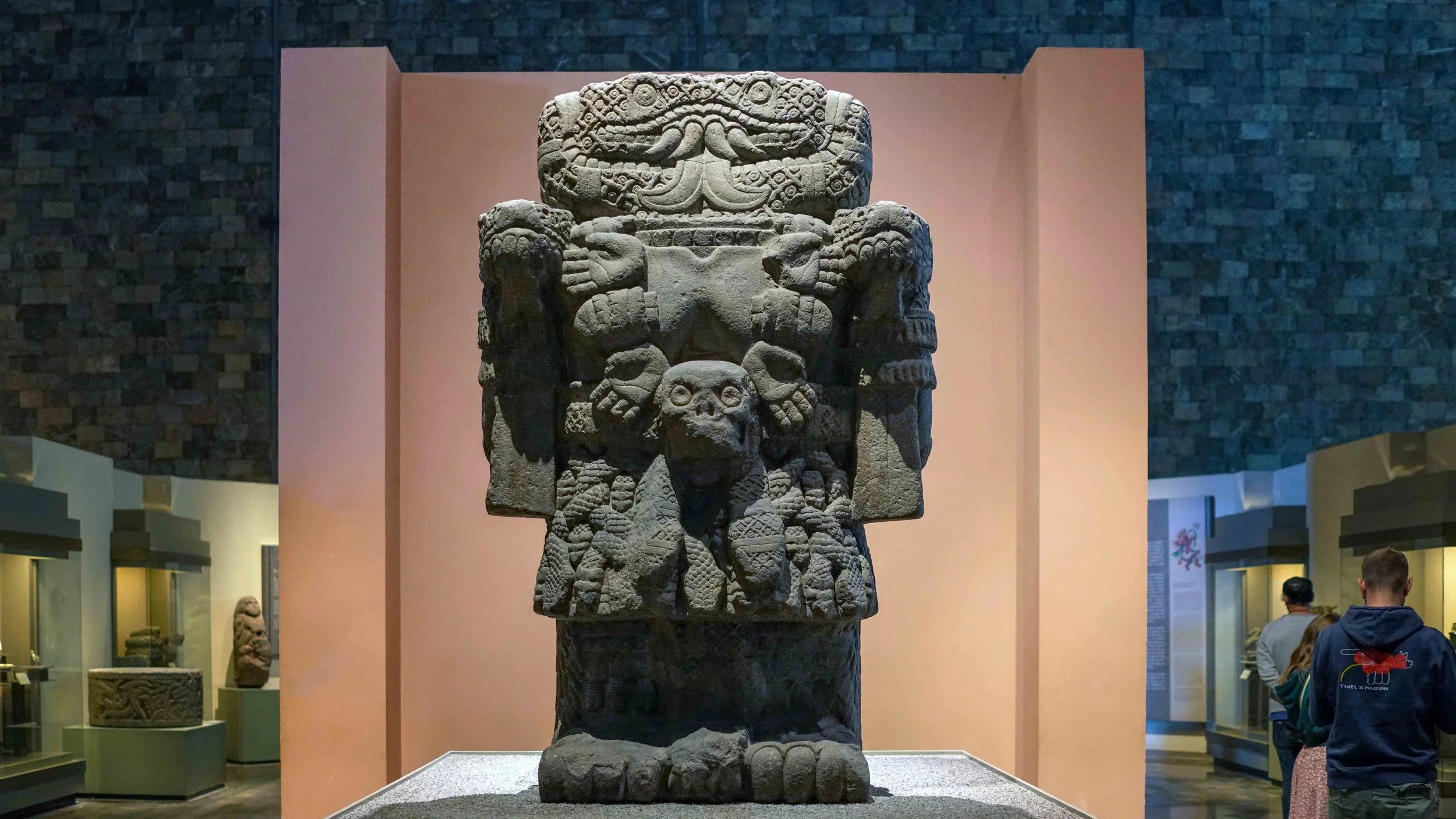
Coatlicue, Mexica (Aztec), c. 1500, basalt, 257 cm high, found on the southeastern edge of the Zócalo in Mexico City. National Museum of Anthropology, Mexico City. Photo: © Dr. Lauren Kilroy-Ewbank
CHAPTERS
0:00 Introduction to Coatlicue
0:40 Visual analysis (formal analysis), and what it does and doesn’t do
1:12 Size, scale, and form
1:58 Decoration and Texture
2:43 Lines
3:19 Shapes and Volume
3:59 More on texture
4:23 What the formal elements tell us
Learn more
Discover more close-looking materials.
Learn more about the Aztecs and later Mesoamerica.
Find more resources about the Medieval World.
Looking for teaching and learning materials about Mesoamerica? Check out our store on ARTSQ or TPT.