
Camelid Sacrum in the Shape of a Canine, Tequixquiac, Meixco
Speaker: Dr. Lauren Kilroy-Ewbank
One of the oldest artworks in North America?
Could this camelid sacrum bone be one of the oldest artworks in North America, dating to 16,000 years ago? Discovered in 1870 near Mexico City during canal excavations, the Tequixquiac sacrum is a small object (possibly) carved from a fossilized camelid bone. It raises big questions about early human creativity in the Americas. This video explores the sacrum, as well as the debate over whether it was made by human hands and what it tells us about prehistoric art worldwide.
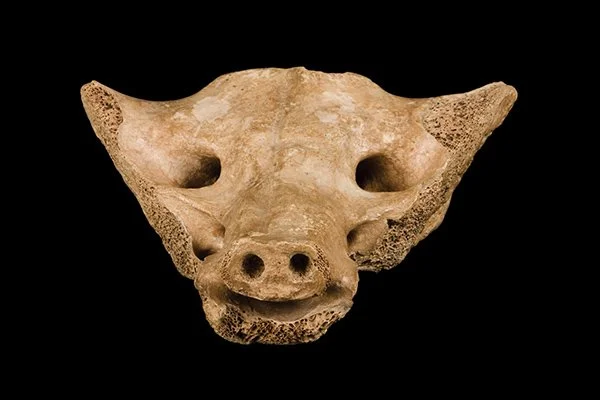
Tequixquiac sacrum
before 1800 BCE, camelid bone, found in Tequixquiac, Mexico. National Museum of Anthropology, Mexico City.
Video chapters
0:00 An enigmatic sculpture is discovered
0:32 The camelid sacrum’s appearance
1:43 The context of its discovery in 1870 and Mariano Bárcena
2:24 Debates about authenticity
3:22 Possible religious significance
3:45 Importance of findspots and scientific excavation
4:06 Prehistoric art of North America
Learn more
Discover more about the prehistoric art of the Paleolithic and Neolithic periods.
Learn more about art in Mesoamerica.
If you are looking for more AP Art History materials, you can find some here.