
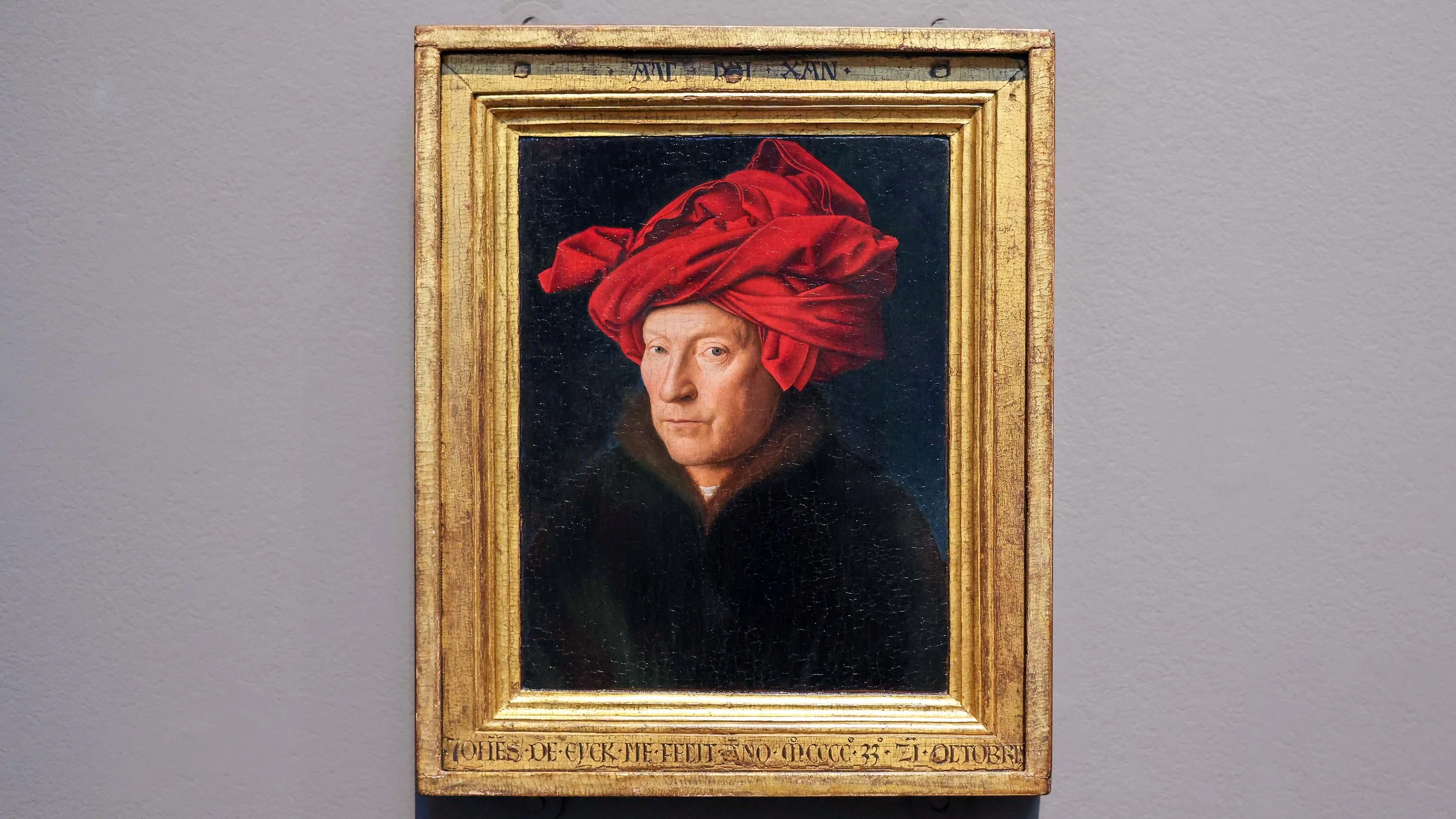
Jan van Eyck, Portrait of a Man (Self-Portrait)
With his piercing gaze, weathered features, and brilliant red chaperon, Jan van Eyck’s 1433 startlingly life-like portrait is widely believed to depict the artist himself.
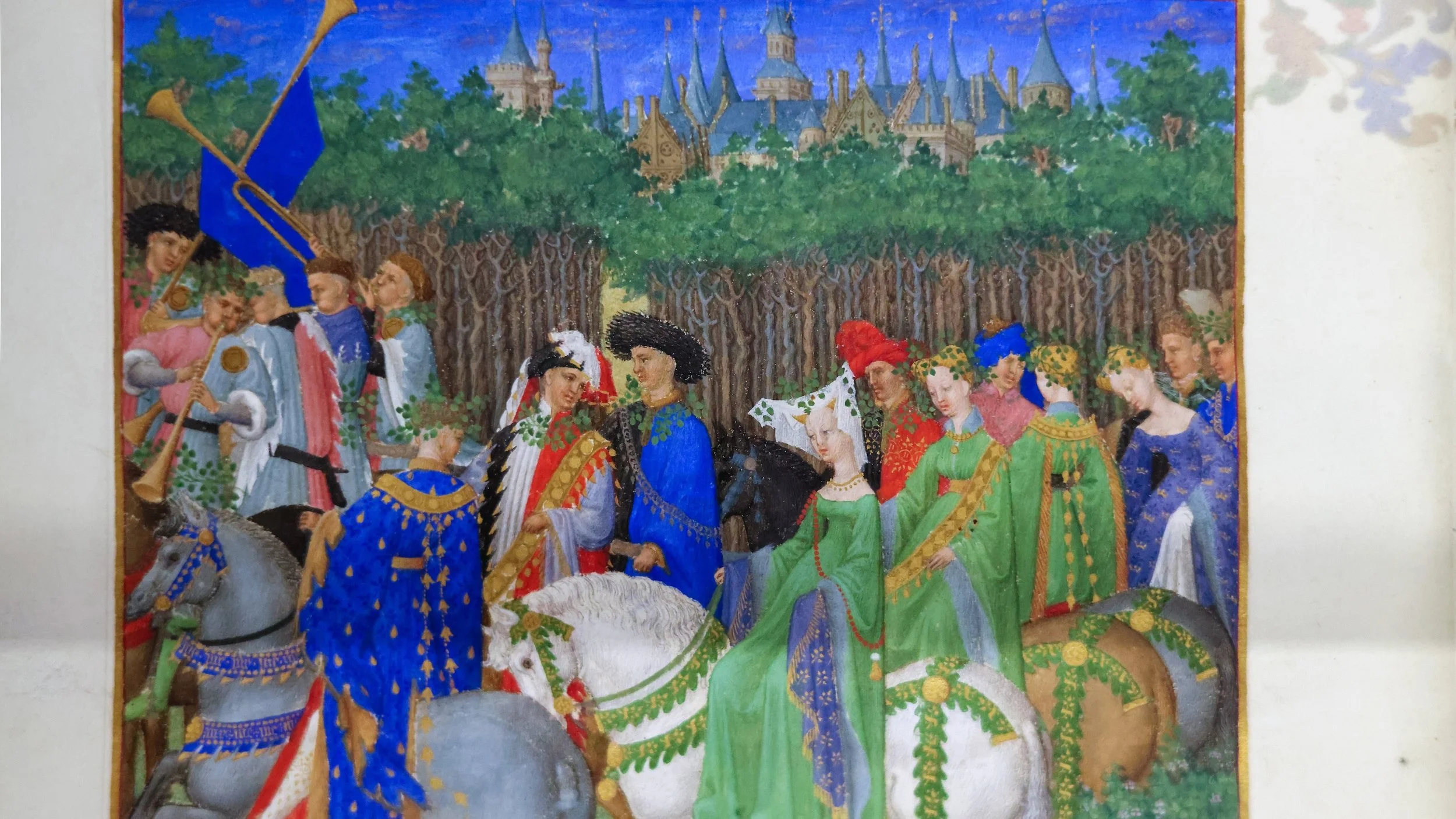
May Calendar Page in the Très Riches Heures du Duc de Berry
In a scene from the medieval illuminated manuscript known as Très Riches Heures of Jean, Duke of Berry, aristocrats have a May celebration in the forest.
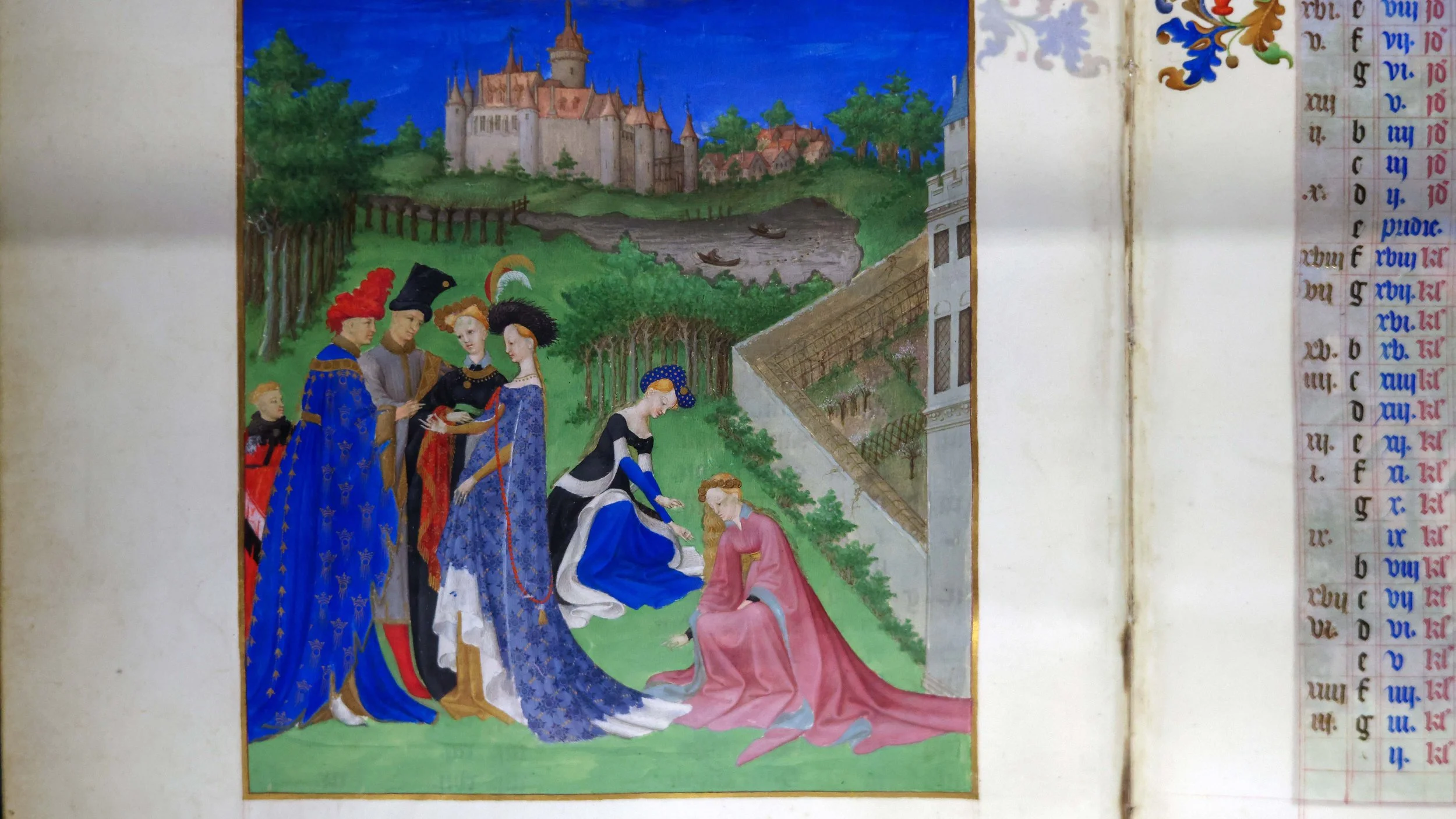
April Calendar Page in the Medieval Très Riches Heures du Duc de Berry
In a scene from the medieval illuminated manuscript known as Très Riches Heures of Jean, Duke of Berry, nobles gather for a wedding and to pick wildflowers.
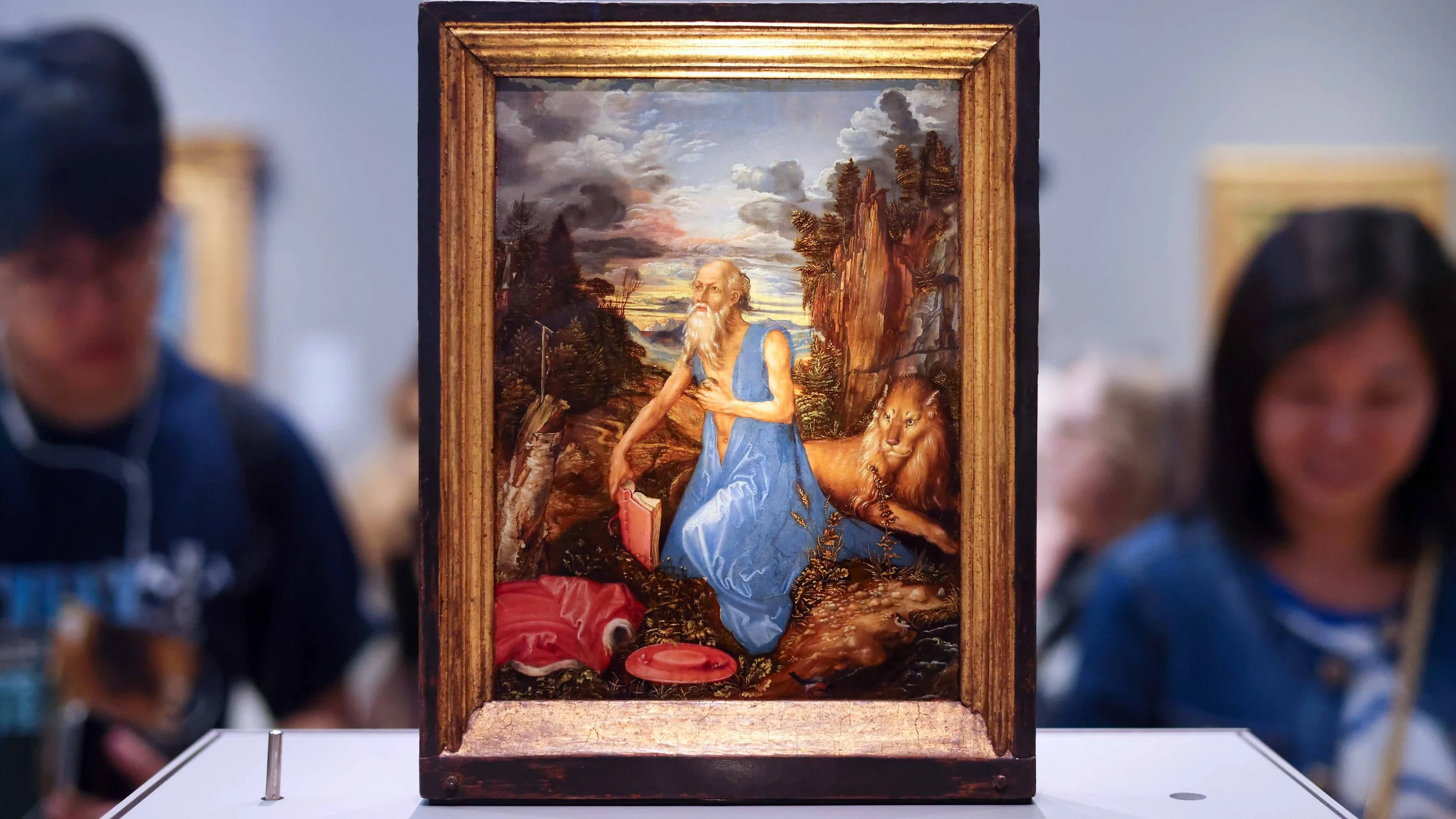
How to Do a Visual Analysis in Art History: A Formal Analysis of Painting
This video explains how to do a visual analysis (formal analysis) of a painting—Albrecht Dürer’s image of Saint Jerome.

What is oil paint? Explore with Jan van Eyck's Annunciation
Jan’s mastery of light, color, and texture brings this divine moment to life. How did he do it? With oil paint!