Jan van Eyck, Portrait of a Man (Self-Portrait)
Speaker: Dr. Heather Graham
A life-like portrait
Take a close look at Jan van Eyck's famous painting of a man in a turban, thought to be a self-portrait. With his piercing gaze, weathered features, and brilliant red chaperon, Jan van Eyck’s 1433 startlingly life-like portrait is widely believed to depict the artist himself. In this video, we explore this creation by one of the fifteenth century’s most celebrated and innovative artists. We consider how the man’s fashionable clothing, commanding presence, and direct gaze proclaim both his prosperity and elevated status in an age when portraits were generally reserved for society’s elite. Even the frame speaks to Jan’s confidence, bearing his signature and personal motto, “Als Ich Can”—as well as I can—a playful show of humility from an artist renowned for his astonishing skill. Dignified, prosperous, and intensely present, Jan seems not simply to look out at us, but to see us across the centuries.
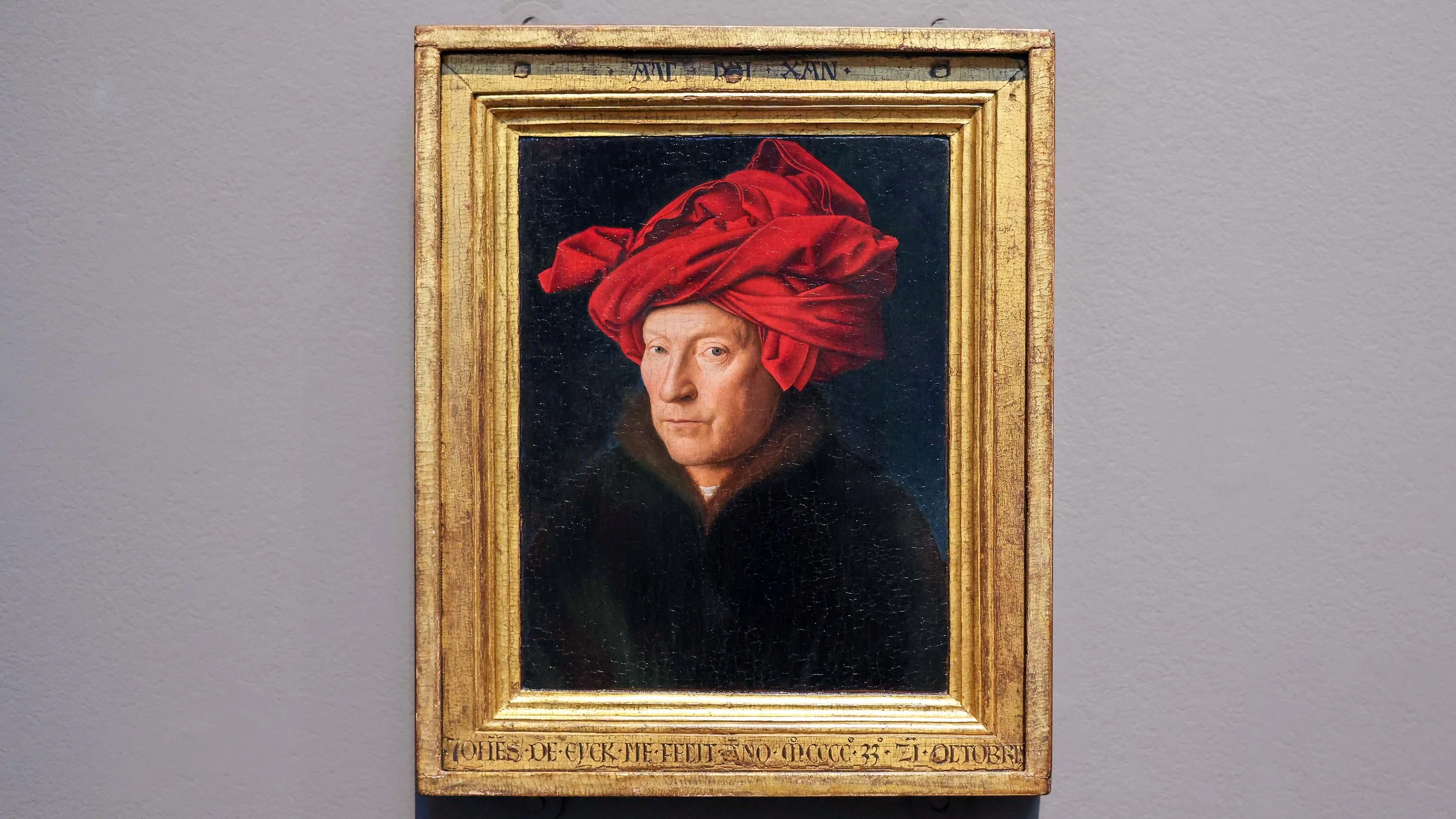
Jan van Eyck, Portrait of a Man (Self-Portrait?), 1433, oil on wood, 26 x 19 cm
National Gallery, London. Photo © Lauren Kilroy-Ewbank
Video chapters
00:00 The Man in the Red Hat 01:00 Fashion and Status 01:23 Meet Jan van Eyck 01:42 A Court Artist 02:10 Presenting the Self through Portraiture 02:40 Clues in the Frame 03:38 The Artist in the Mirror
Learn more
Check out our materials on Northern Renaissance art