
A flower-shaped mirror from the Korean Goryeo (Koryo) dynasty—learning to look
Speaker: Dr. Cortney Chaffin Kim
Learning to look
Let’s look at a gorgeous flower-shaped mirror from the Korean Goryeo (Koryo) dynasty (918–1392). This mirror is made of bronze, an alloy of copper and tin. Bronze changes over time when exposed to air and moisture, developing a greenish hue called a patina. One side of the mirror was originally polished to a sheen, while the back side features an intriguing scene of figures and architecture in a landscape of craggy rocks.
We at ARTSQ think close looking is really important, so in this video we introduce the vocabulary you can use to describe the formal elements of a historical object like this one. We’ll look closely at the decoration on the back of the mirror and learn how to use familiar things to describe things we might not have the cultural background to analyze. You’ll also learn how an object from Korean art history relates to the Statue of Liberty in New York City! In art history, close looking is the first step in a formal analysis, which examines elements of art and principles of design. If you’ve ever wondered how to conduct a formal analysis, our close-looking series offers an excellent first step.
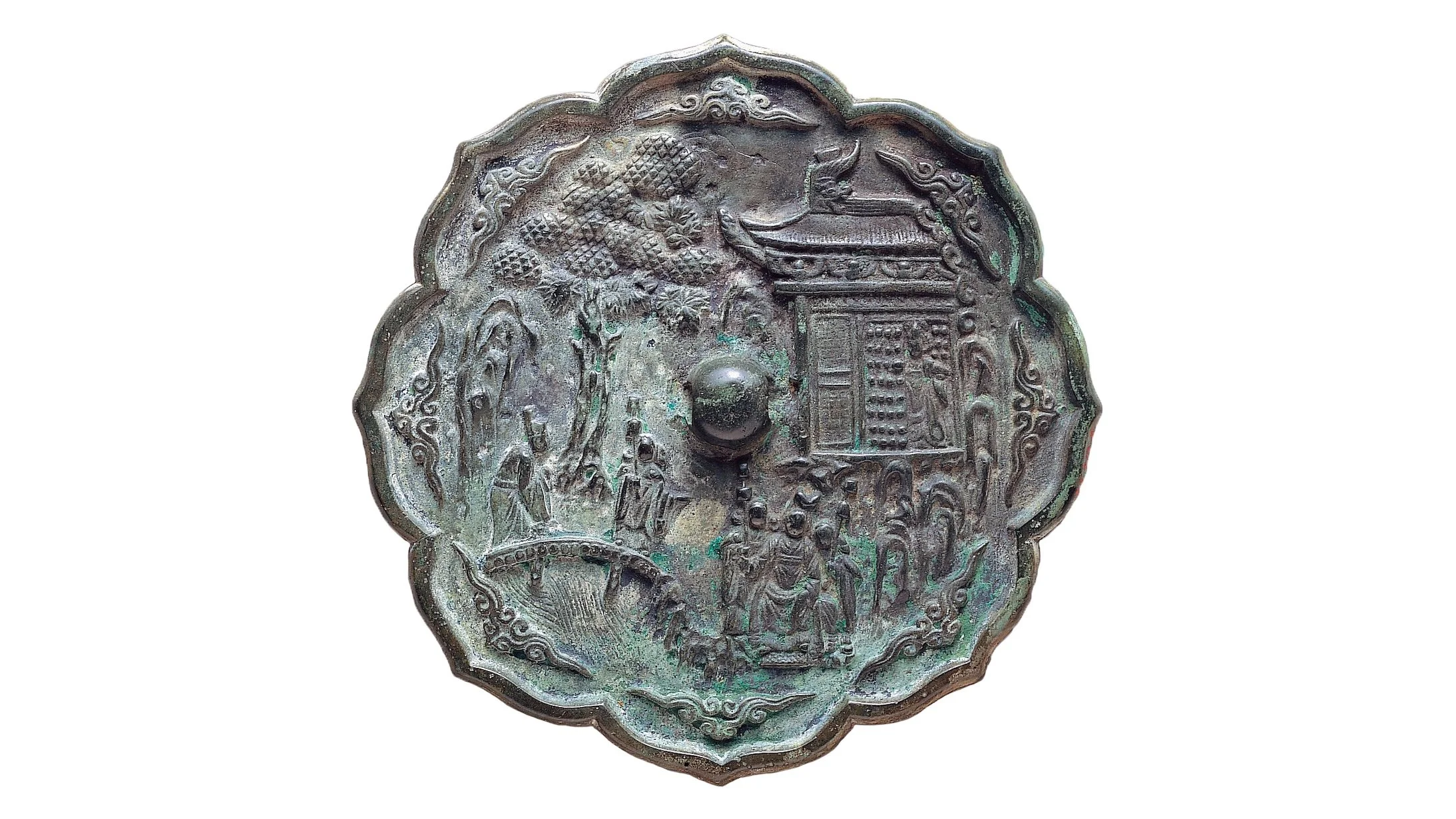
Mirror decorated with figures in a landscape, 918–1392, Goryeo dynasty, bronze, 7 in. diameter (17.8 cm). The Metropolitan Museum of Art
CHAPTERS
0:00 Introduction to the Goryeo mirror from The Met 0:19 Importance of close looking 0:52 Let’s take a closer look, what do you see? 1:32 The color of the Koryo mirror 2:18 The shape of the Goryeo mirror 2:44 A close look at the decoration on the mirror 4:49 The eight petals of the mirror and ornamental decoration 5:18 Our eyes as investigative tools and the value of close looking
Learn more
Find more resources about close looking and formal analysis.
See more about Korean art.