Frida Kahlo's Viva la Vida (Long Live Life)—Her Final Painting
Speaker: Dr. Lauren Kilroy-Ewbank
Frida’s Final Painting
Frida Kahlo’s final painting, Viva la Vida, is a powerful symbol of life’s celebration. This video examines in detail the famous Mexican painter’s depiction of watermelons, her style and historical models, and the painting’s historical context. The modern still-life painting is more complex than it might initially appear.
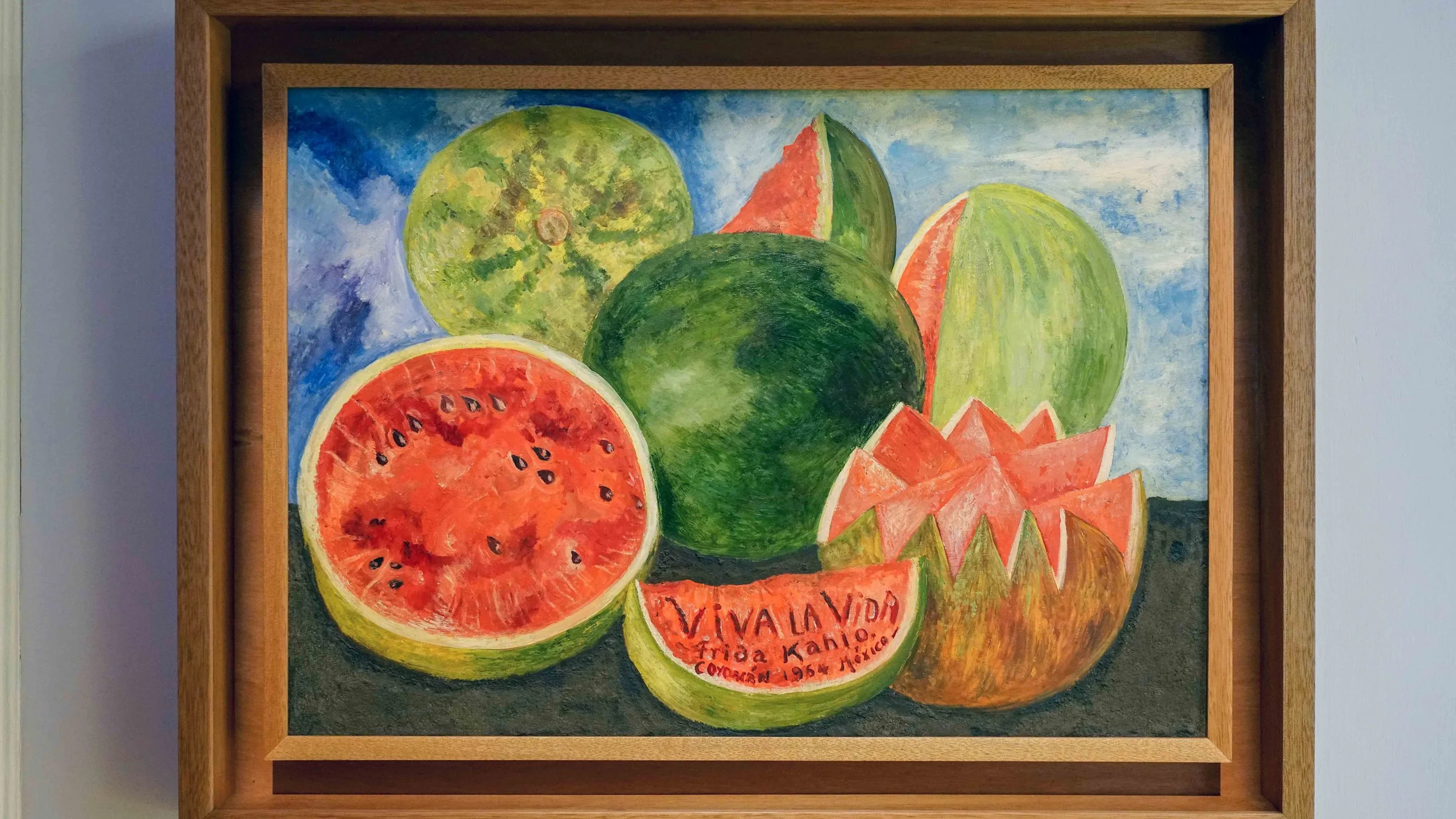
Frida Kahlo, Viva la Vida, 1954. Museo Frida Kahlo. Photo: © Dr. Lauren Kilroy-Ewbank
Note: In this video, we chose to use "Frida" to refer to Frida Kahlo because that is how most people discuss her—it’s familiar. But ideally, people would use Kahlo’s last name when referring to her, much as they would most male artists.
Video chapters
0:00 Introduction to Frida Kahlo’s Viva la Vida
0:32 A brief introduction Frida Kahlo
1:47 Kahlo’s Still Lifes
2:03 Looking Closely at Viva la Vida
3:32 Associations with the Mexican Flag
3:58 Connections to Día de Muertos
4:34 Naturaleza Muerta
4:53 Scale and Borrowing from 19th-century artists Hermenegildo Bustos and Agustín Arrieta
Learn more
Find more resources about women artists.
Learn more about Latin American modernist artists.
Watch a video about still life painting.