
The Aztec Sun Stone or “Calendar Stone”: The most famous Aztec artwork
The Aztec Calendar Stone: Uncover the stories of the five different times or Suns, the epic battles fought by the sun god, Tonatiuh, and the symbols of animals and other elements that are calendrical glyphs on this incredible stone. Did you know we are living in the fifth sun, called Nahui Ollin? The Sun Stone offers a fascinating glimpse into Aztec civilization and culture. It’s not hard to see why it’s one of the most famous artworks in Mesoamerican history!
Speaker: Dr. Lauren Kilroy-Ewbank
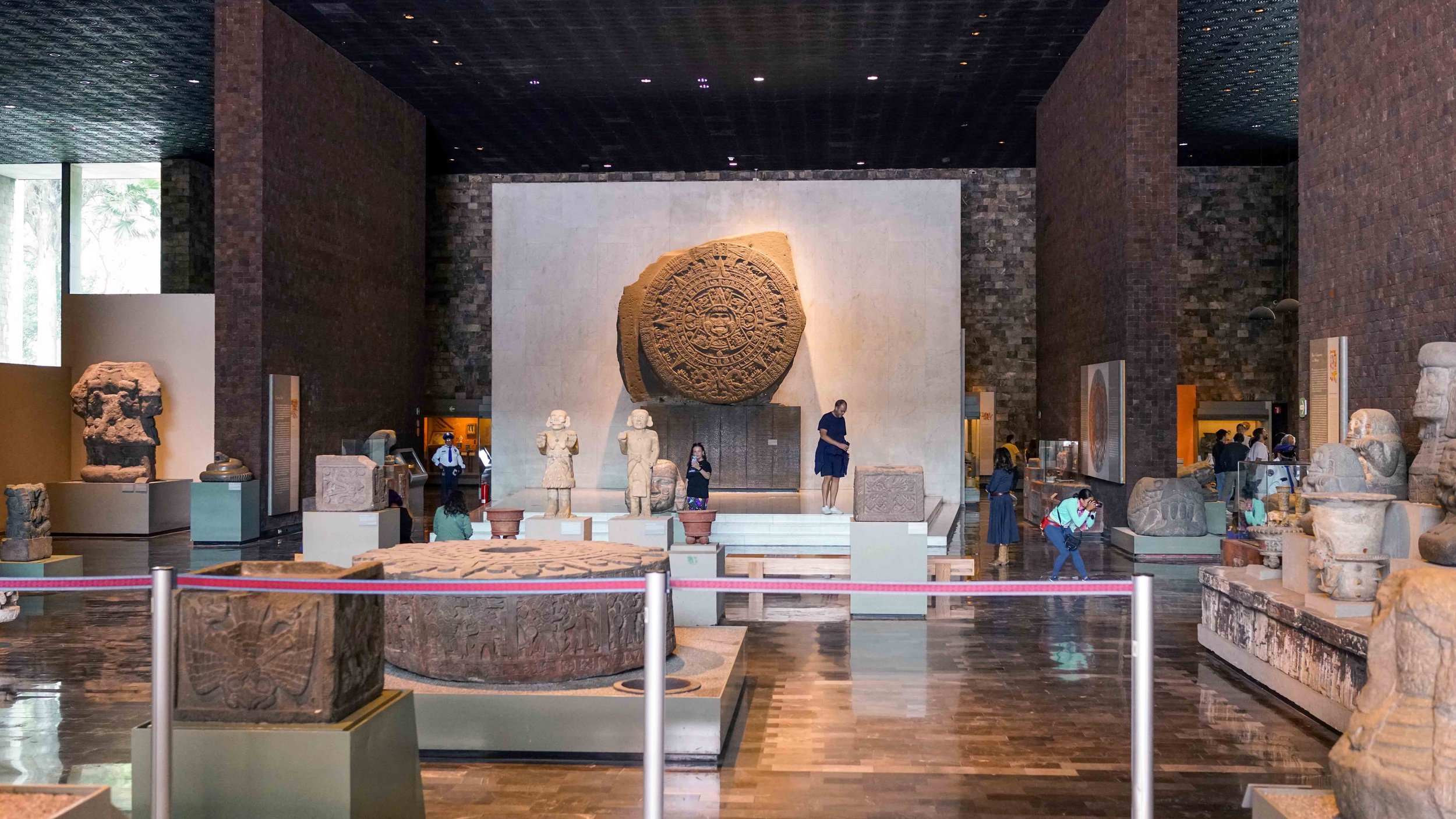
Aztec Hall, National Museum of Anthropology (Museo Nacional de Antropología), Mexico City
(Photo: Lauren Kilroy-Ewbank, CC BY-NC-ND 2.0)
The Aztec Sun Stone
If you ever have a chance to step into the Hall of the Aztecs (Mexica) at Mexico City's National Museum of Anthropology, then prepare to be amazed by the Aztec Sun Stone (also called the “Calendar Stone” or “Piedra del Sol” in Spanish). The Sun Stone was originally sculpted in the Aztec capital of Tenochtitlan and was rediscovered in 1790 at the edge of the Zócalo (or Plaza Mayor) in Mexico City. This massive rock reveals the Aztecs' understanding of the universe or their cosmic beliefs.
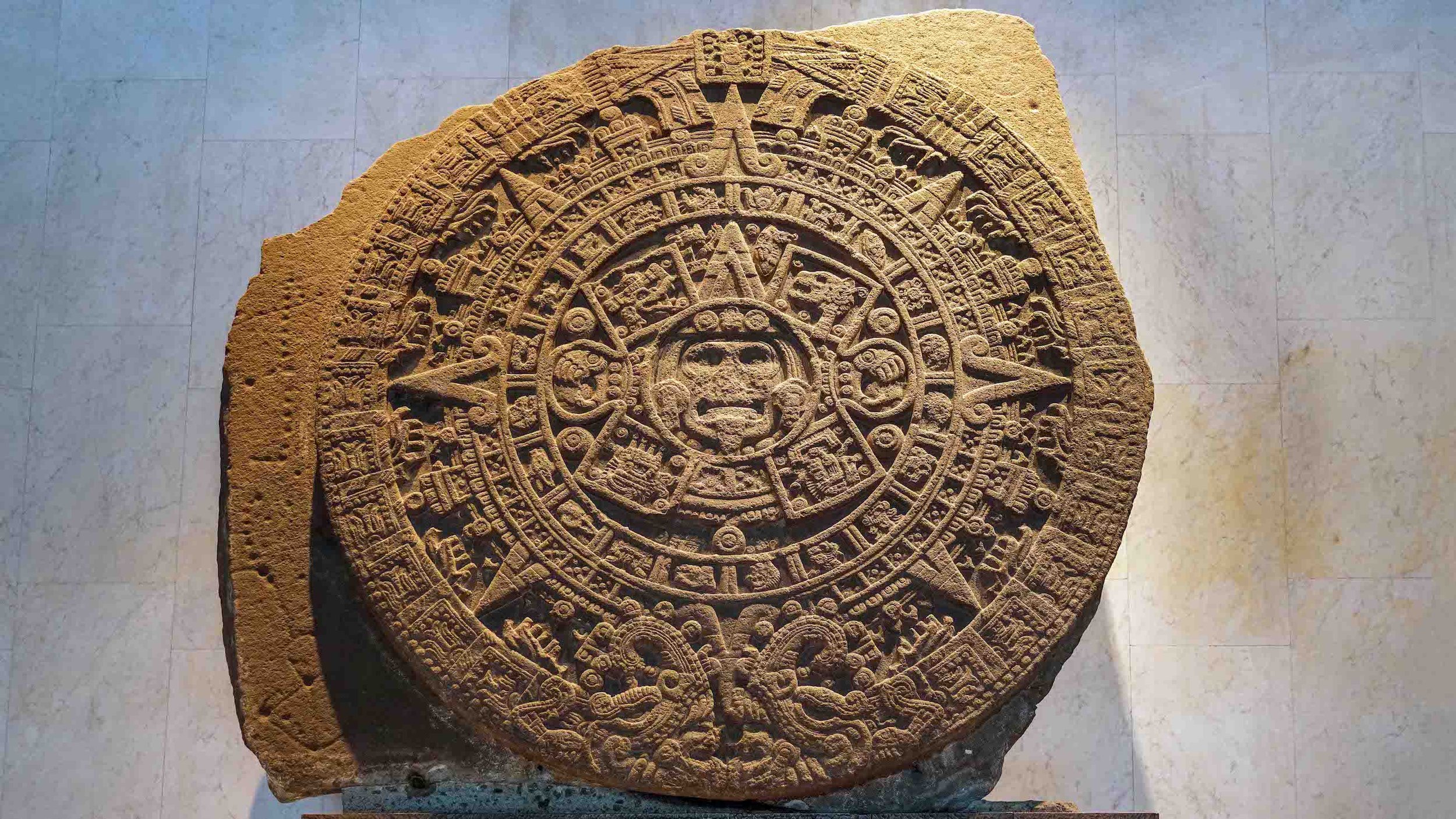
Mexica artists (Aztec artists), Sun Stone (also called the "Calendar Stone"), c. 1502–20, stone (basalt), found on the edge of the Plaza Mayor (or Zócalo) in Mexico City. National Museum of Anthropology (Museo Nacional de Antropología)
(Photo: Lauren Kilroy-Ewbank, CC BY-NC-ND 2.0)
We have a great introductory video that explains some of the main symbolism of the stone, including the stories of the five different times or Suns, the epic battles fought by the sun god, Tonatiuh, and the symbols of animals and other elements that are calendrical glyphs on this incredible stone. Did you know we are living in the fifth sun, called Nahui Ollin? The Sun Stone offers a fascinating glimpse into Aztec civilization and culture. It’s not hard to see why it’s one of the most famous artworks in Mesoamerican history!
Plus, the National Museum of Anthropology (Museo Nacional de Antropología) is one of the best museums in Mexico (OK, one of the best museums in the world!). Anyone traveling to Mexico City is almost certain to visit the Great Hall of the Aztecs, where the Calendar Round looms over everything else!
Video chapters:
0:00 Introduction to the National Museum of Anthropology and the Hall of the Aztecs
0:20 Introduction to the Sun Stone or Calendar Stone
0:44 Where was the Sun Stone placed?
0:58 Who were the Aztecs or Mexica?
1:10 The weight, material, and colors of the Sun Stone
1:31 The face at the center, maybe the Sun God, Tonatiuh
2:27 A cosmic story about the universe’s birth and rebirth
-
Hey there, adventurers! I’m Lauren, and today, we're embarking on an exciting journey to Mexico City's National Museum of Anthropology to the Hall of the Aztecs. We're about to dive deep into the mysteries of a famous artwork, The Sun Stone, sometimes called The Calendar Stone. It’s not just a beautiful example of sculpture, though; it tells us a lot about Aztec mythology and how they understood the world!
Now, this stone might look a tad puzzling at first. There is a lot going on! But if we take a deep breath and give it a good look, something starts to pop out, doesn't it? It's kind of like a sun with lots of rays! But hold onto your hats, because this Sun Stone is way more than just a sun-shaped thingamajig!
Believe it or not, this stone didn't hang high on a wall like it does today. Nope, it was probably flat on the ground. And!—it was never finished! You can still spot some parts where the Aztecs hadn't quite finished their carving.
By the way, who were these Aztecs? Well, they were part of a bigger Indigenous group called the Nahua, and they spoke Nahuatl. They lived in central Mexico and built their capital city in the middle of lake—it was called Tenochtitlan, which is modern-day Mexico City. <Pssst, they actually called themselves the Mexica>
Back to our stone though . . .
This massive stone weighs as much as 10 elephants and is as thick as three 12-inch pizzas stacked on top of one another. It's made of rock that used to be lava so it's super-duper tough! And even though it's pretty detailed now, it was originally painted and would have been so much easier to see when it was made around the year 1500.
Right smack in the middle, there's a face that might make you smile or give you a little shiver. This face has eyes that seem to go deep, a wide grin, and some fancy ear jewelry. He also has clawed hands. Oh, and that tongue? It's not really a tongue; it's a special sacrificial knife.
This guy's all dressed up! Those fancy ear decorations were worn by important people in Aztec culture. So, who's he supposed to be? Most folks say he's Tonatiuh, the Aztec sun god. He was associated with war. In fact, the Aztecs believed he had to wage war against darkness every night! He had to bring light and life each morning. But that constant battling was exhausting and made him really hungry, so he needed blood to drink. That’s likely why he has a sacrificial knife for a tongue. Pretty interesting, right?
Now, here's the fun part: this stone isn't your ordinary calendar. It tells an epic cosmic story about how the Aztecs saw the universe's birth and rebirth. They believed there were five different times, or "suns," and our time now is the fifth one.
But guess what they called this fifth sun? "Four Movement"! And they made the sign for it bigger than the earlier four times. See those four shapes around Tonatiuh? They make a symbol for "Movement," which in the Nahuatl language is the word "ollin." And notice those four dots? That's how they wrote "4-Movement."
Around these shapes, you'll find the names of the earlier four times, or "suns." There are signs that help us figure out how those times ended! The way these earlier suns were destroyed may sound a bit scary: During the first sun, Nahui Ocelotl, it was death by jaguars, during the second sun, Nahui Ehécatl, it was death by high winds, during the third sun, Nahui Quiáhuitl, it was death by fiery rains, and finally, during the fourth sun, Nahui Atl, it was death by water.
And brace yourselves: they believed our time, the fifth one would end with things moving a lot, like earthquakes! Yikes! That makes sense because Mexico City has lots of volcanoes and places where the ground shakes.
But why all this talk about things getting destroyed and sacrifices? The Aztecs believed their gods sacrificed themselves to create the sun and the world we live in. In return, the gods wanted offerings, like animal sacrifices or even human ones. Maybe that's why Tonatiuh has a knife for a tongue.
See those big rays sticking outward? They point in 4 directions—North, South, East, and West. This is another way the stone shows how the Aztecs thought about the world, divided into four parts.
Can you spot some animals? I see a crocodile, a snake, and a rabbit. There are also symbols for things like reeds and wind. These are the 20 day signs from one of the Aztec calendars, even though this stone doesn't work like a regular calendar.
Look closely at the edge; two snakes meet at the bottom, and they've got faces coming out of their mouths. These are called fire serpents (or xiuhcoatl), and they're like the Aztec's trusty timekeepers. They helped carry the sun across the sky.
So, what's the big lesson from this magnificent stone? It's like a map showing how the Aztecs understood the world and their place in it.
But you know what? There are still some mysteries about this stone. We're not exactly sure what it was used for, though some people think maybe it was where two people could battle to the death.
The Sun Stone isn't just a pretty stone; it's like a window into the past, brimming with history, stories, and more. So, the next time you step into a museum or come across an ancient treasure, remember, there's often a whole world of stories and secrets just waiting to be discovered.
We can spot symbols like Moctezuma II's royal mark, which might mean this treasure was crafted during his rule. Though, people debate that. Most likely it was made around 1500. And there's a jaguar head and a flint knife, which might be the start of the fifth era.

This printable page of guided notes is for our video about the famous Aztec Sun Stone ("Calendar Stone"). It includes a word bank and then paragraphs with blank spaces for students to fill in.