
Spondylus Shell in the Kingdom of Chimor in the Ancient Andes
Speaker: Dr. Lauren Kilroy-Ewbank
The Wealth of the Kingdom of Chimor
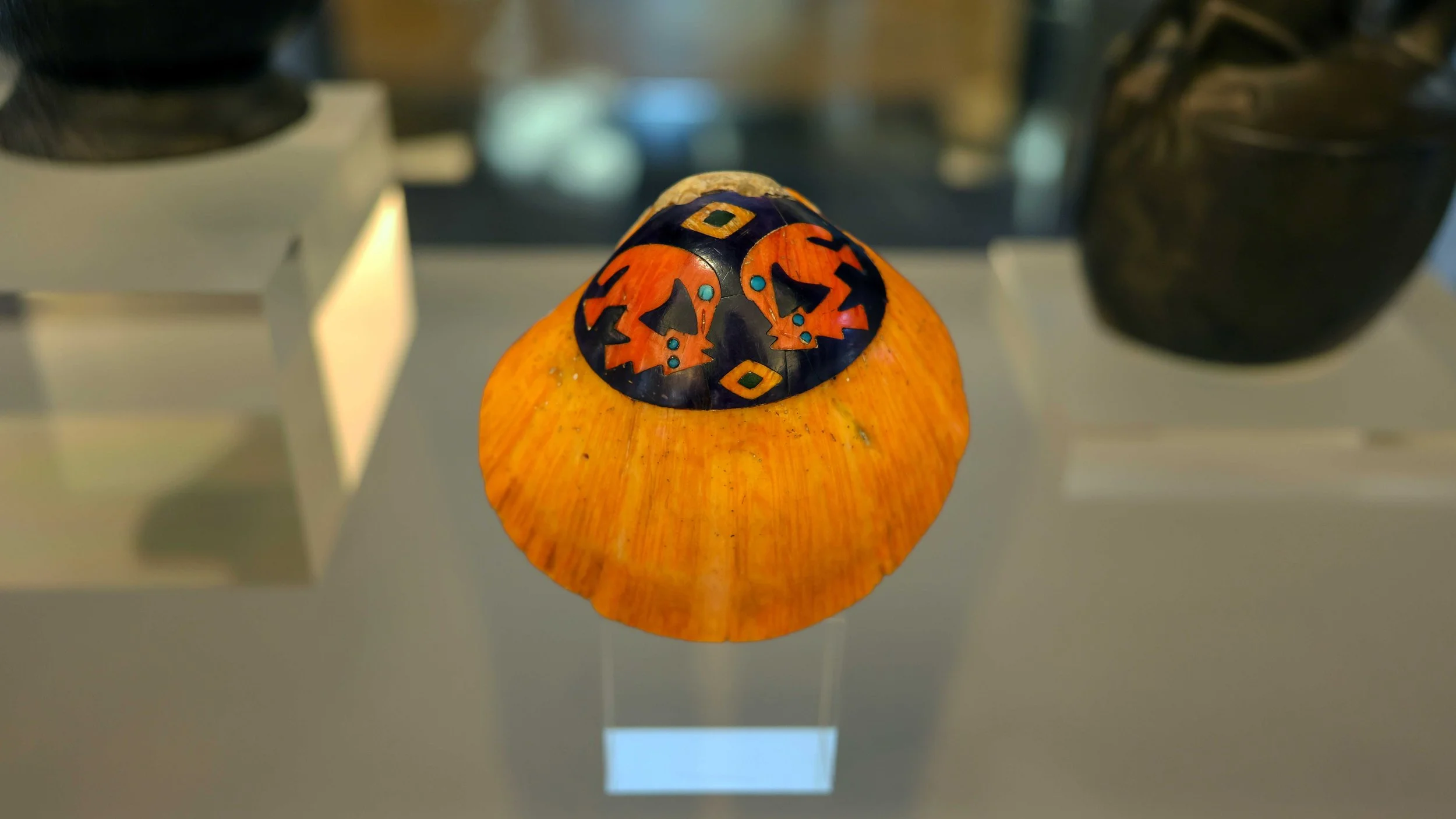
The Chimú kingdom of Chimor thrived along the coast of what is now Peru, growing wealthy in part because of the Spondylus shell, also known as the thorny oyster, a thorny bivalve from Ecuador's warm coastal waters that was more valuable in the Andean world than silver or gold.
This video focuses on a pendant made by Chimú artists between 900 and 1470 CE, depicting two fishing birds inlaid in contrasting Spondylus colors with a touch of turquoise, set within a brilliant orange shell. Because Spondylus was so precious, the king of Chimor even had a servant, the Fonga Sigde, whose job was to crush it into powder and scatter it before him as a dazzling red path of power. At the Chimú capital of Chan Chan, rulers built grand citadels (ciudadelas) decorated with reliefs of shell divers and fishermen, and the shell's connection to fertility, water, and the divine made it central to Andean religious life.
Video chapters
0:00 The wealth of Chimor and Chan Chan
0:32 What is the Spondylus shell?
1:08 A Pendant
1:34 The Ruler's Path of Power
1:56 Chan Chan's Ciudadelas
2:34 A Sacred Connection to the Sea
Learn more
Learn more about the Ancient Andes.
Discover more about the global Middle Ages.
Check out our entire glossary of art history.