
The Toltec Coyote Warrior of Tula
Speaker: Dr. Lauren Kilroy-Ewbank
Toltec shellworking and coyote warriors
This video examines the so-called Coyote Warrior of Tula, a small Toltec sculpture now in the National Museum of Anthropology in Mexico City. Made between about 900 and 1250 CE, this plumbate ceramic figure is covered in shimmering shell mosaic, with carved bone teeth and a human face emerging from the coyote's mouth. We consider the three theories about who it depicts (Huehuecóyotl, Ce Acatl Topiltzin, or Quetzalcoatl), what it tells us about Toltec and Postclassic warrior orders, and why its rare freshwater shellwork deserves more attention in art history.
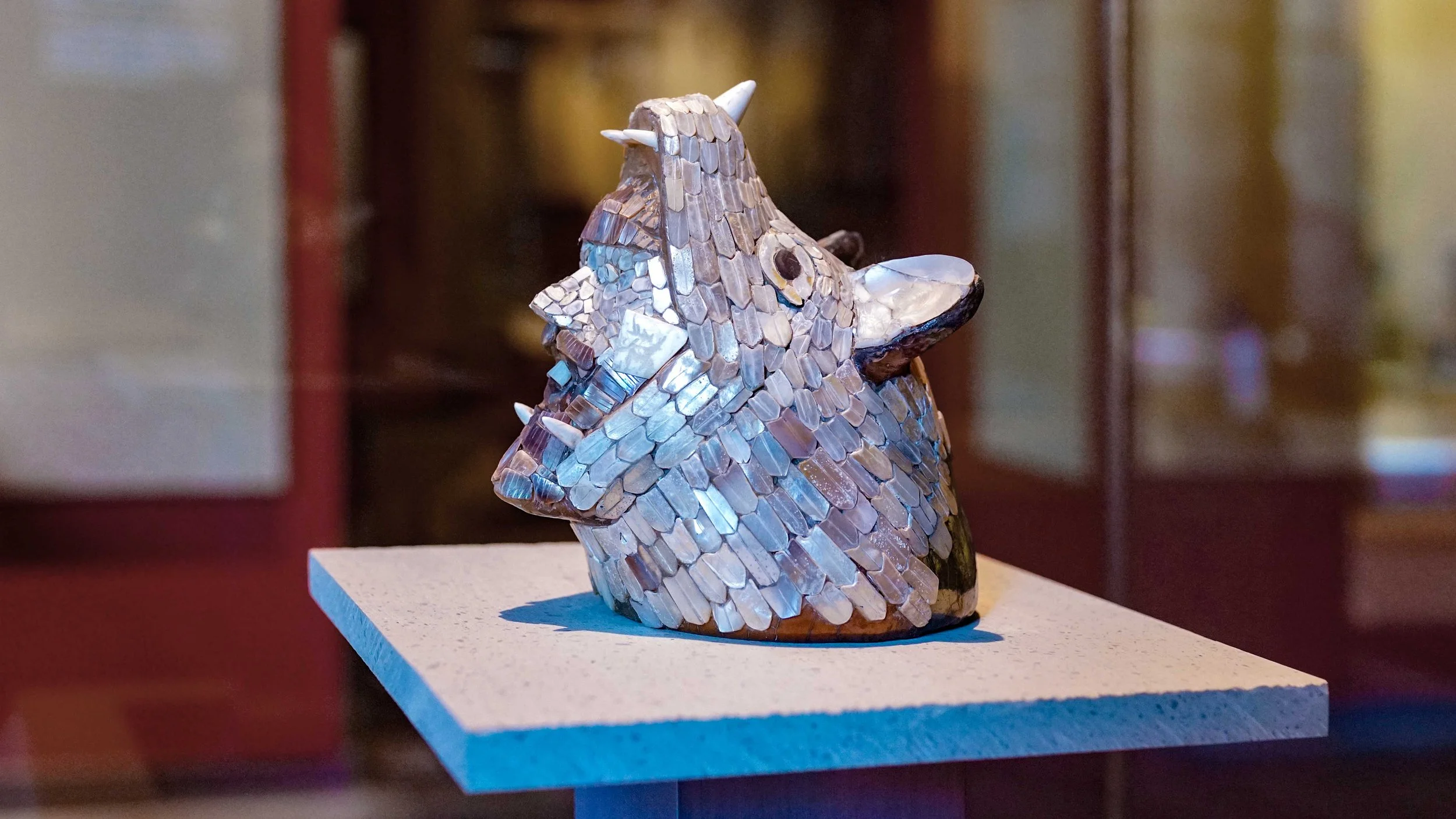
Face emerging from a coyote's maw, Toltec, Early Postclassic (900–1250 CE), gray clay, shell, and bone, from Tula, Hidalgo, Mexico, 13.5 x 9 cm. National Museum of Anthropology, Mexico City. Photo © Lauren Kilroy-Ewbank.
Video chapters
0:00 The Coyote Warrior of Tula 1:51 Debate about who or what it represents 3:28 Shell-work
Learn more
See more resources about Mesoamerica.
Learn more about the Toltecs.