
What is conflated narrative? | The Enlightenment relief at the Great Stupa at Sanchi
Speaker: Dr. Cortney Chaffin Kim
The Enlightenment relief at the Great Stupa at Sanchi
In early Buddhist art, like the sandstone reliefs adorning the torana gateways at the Great Stupa at Sanchi, artists found creative ways to condense multiple moments into one composition. How does a single image like this one show the passage of time?
This video examines a relief from one of the architraves on the western gateway at the Great Stupa at Sanchi that uses conflated narrative to tell a story. Dated to the 1st century BCE, the relief depicts the enlightenment of the historical Buddha under the Bodhi tree and his defeat of Mara, Lord of the Senses. Since early Buddhist art is aniconic, we explain the symbols used to depict the Buddha’s presence in this scene and show how they are used to illustrate two scenes in a story.
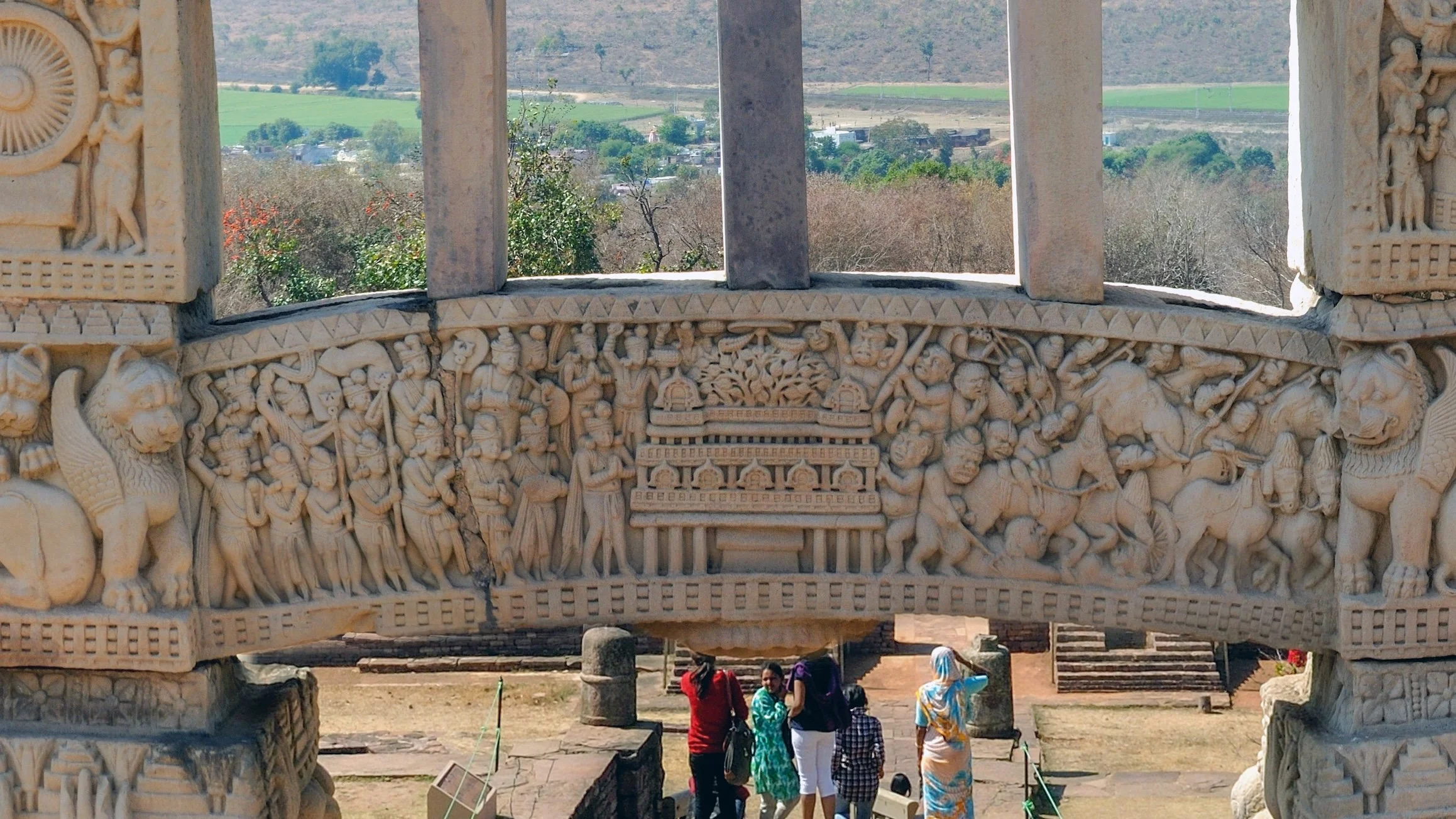
Enlightenment relief from the western torana, Great Stupa (Stupa 1), 1st century BCE, Sanchi, Madhya Pradesh, India. Photo: Biswarup Ganguly, CC BY 3.0.
Video chapters
0:00 Introduction
0:25 What is a conflated narrative?
0:57 Aniconism in Buddhist art
1:44 How to read the Enlightenment scene at the Great Stupa at Sanchi
3:27 Great Stupa at Sanchi
4:25 Didactic art
Learn more
Check out our entire glossary of art history.
Discover more resources about the Great Stupa at Sanchi.
Learn more about early Buddhism in South Asia.