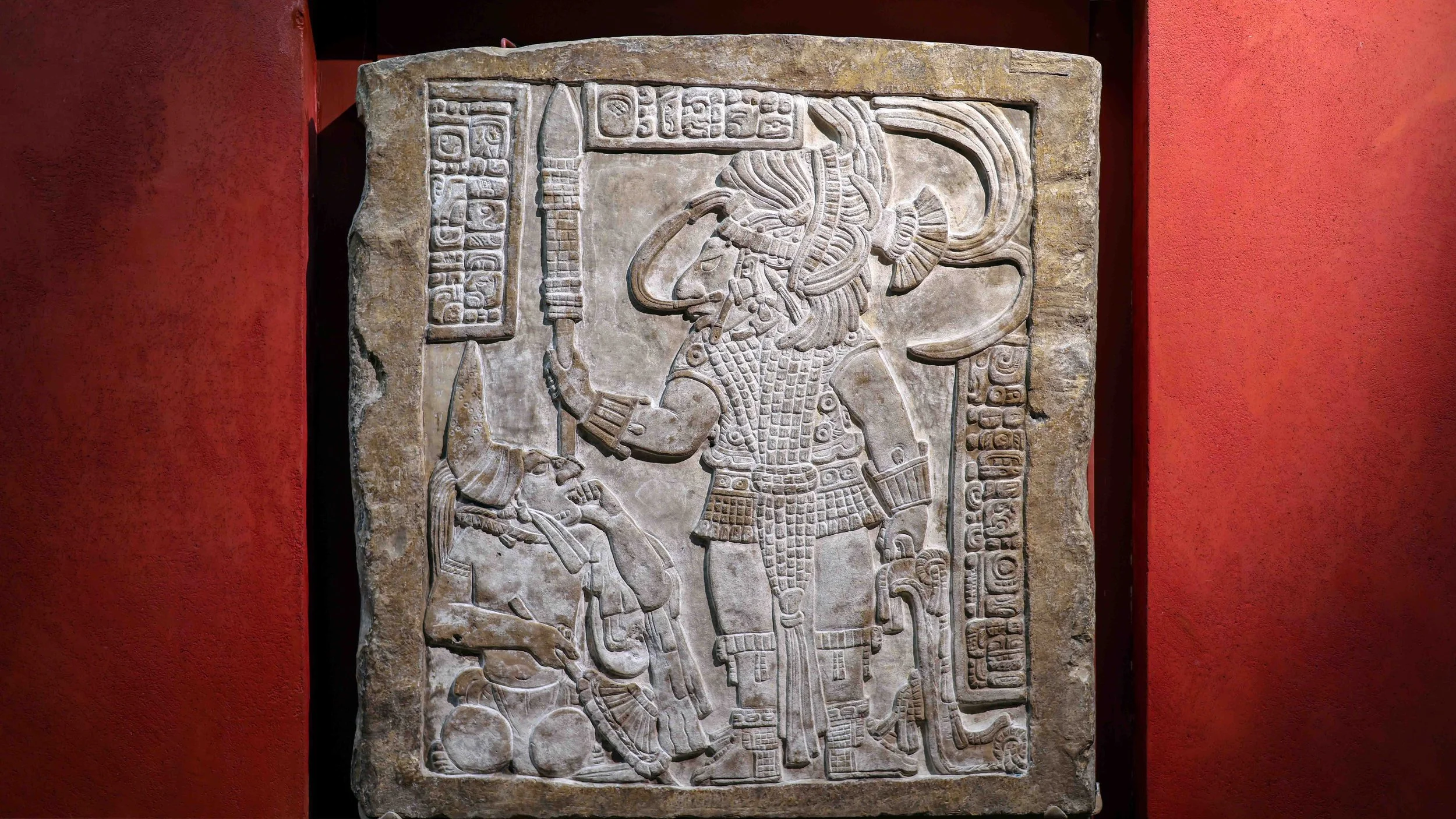
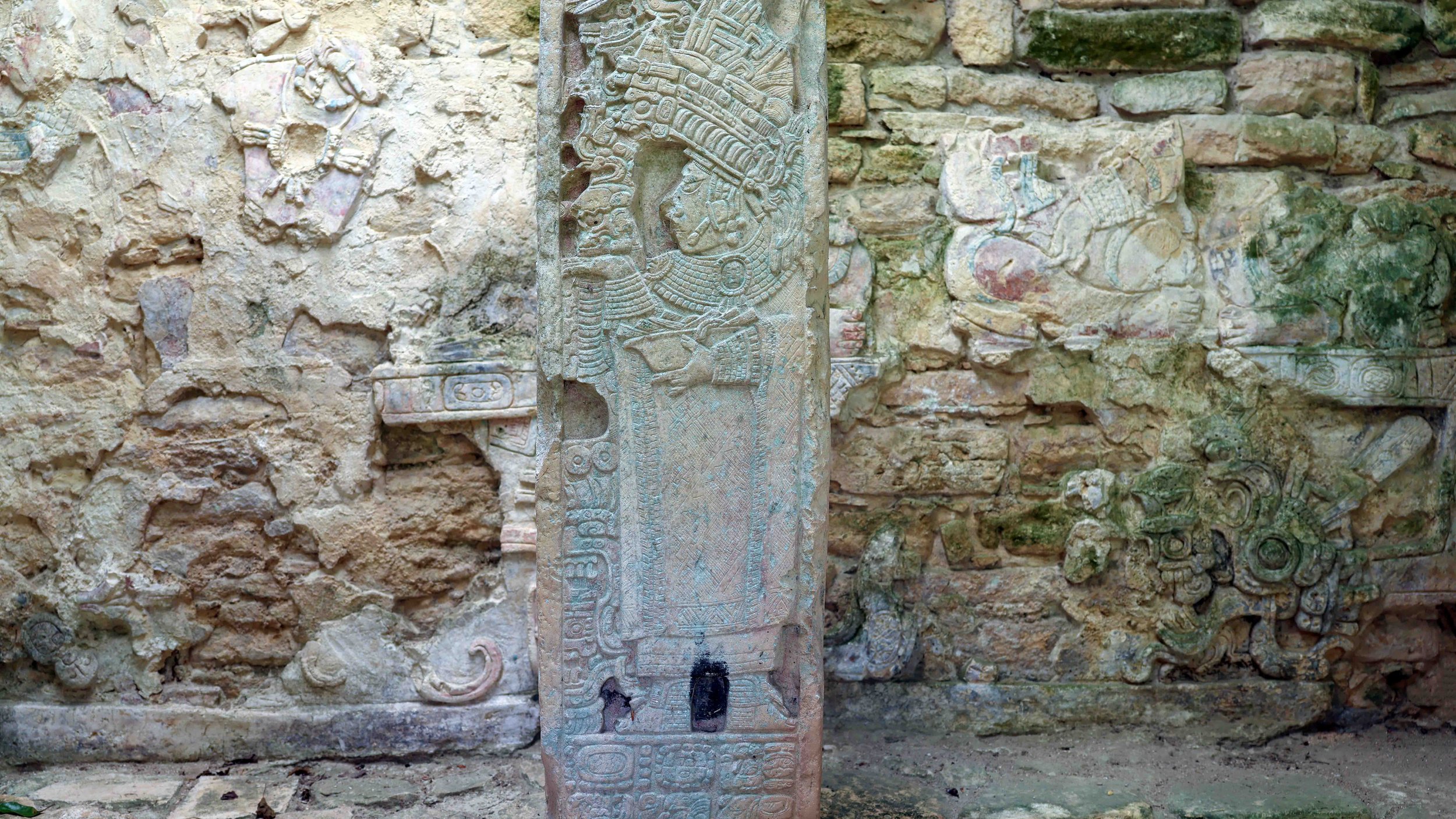
Yaxun Bʼahlam IV
(Bird Jaguar IV)
Ancient Maya king from Yaxchilán (709–68 CE)
Ruled the Maya city-state of Yaxchilán in Chiapas, Mexico. The son of Lady Ik’ Skull (Lady Eveningstar) and Itzamnaaj B'ahlam III (Shield Jaguar), he was born into the royal line of the powerful ancient Maya city-state of Yaxchilán.

Supercharge your learning!
This informational text/reading comprehension "bundle" about the ancient Maya of Mesoamerica covers topics such as geography and land, Classic period cities such as Palenque and Tikal, religion and rituals, writing, art, calendars, the ballgame, conflict, and the living Maya. It also includes useful graphics to explain concepts such as Maya writing (glyphs), as well as short text boxes that discuss topics like the differences between Maya and Mayan. For ease of reading, the text is presented in a single full-color PDF, similar to a textbook chapter. It is beautifully illustrated with photographs, many taken on-site, to bring the Classic Maya world to life.

These 33 printable word wall cards feature vocabulary related to Mesoamerican geography and civilizations, including the Aztec (Mexica), Maya, Olmec, Zapotec, and Mixtec. They are an eye-catching and engaging way to introduce students to important terms and cultures from the region known as Mesoamerica. The cards can be used on bulletin boards or printed as flashcards. They could be part of social studies stations, test reviews, and more—they have many applications in the classroom.

This informational text/reading comprehension "bundle" about Mesoamerica covers topics such as Mesoamerica's geography, timeline, and chronology, writing, religion, calendars, and more. It also includes useful graphics to explain concepts such as Maya writing and pictographs, as well as short text boxes that discuss topics like the differences between Maya and Mayan. For ease of reading, the text is presented in a single full-color PDF, similar to a textbook chapter. It is beautifully illustrated with photographs, many of which were taken on-site, to bring the Mesoamerican world to life.

This informational text/reading comprehension "bundle" about Aztec deities and mythology covers topics such as important gods and goddesses in the Aztec pantheon, key myths like the Birth of Huitzilopochtli, and identification of deities. For ease of reading, the text is in one full-color PDF and is similar to a textbook chapter. It is beautifully illustrated with photographs, many taken on-site, to make the Aztec world come alive.

This primary source activity focuses on an image of an Aztec ruler (Moctezuma II) from the Codex Mendoza to help students learn to look closely and use that visual evidence to make a claim.
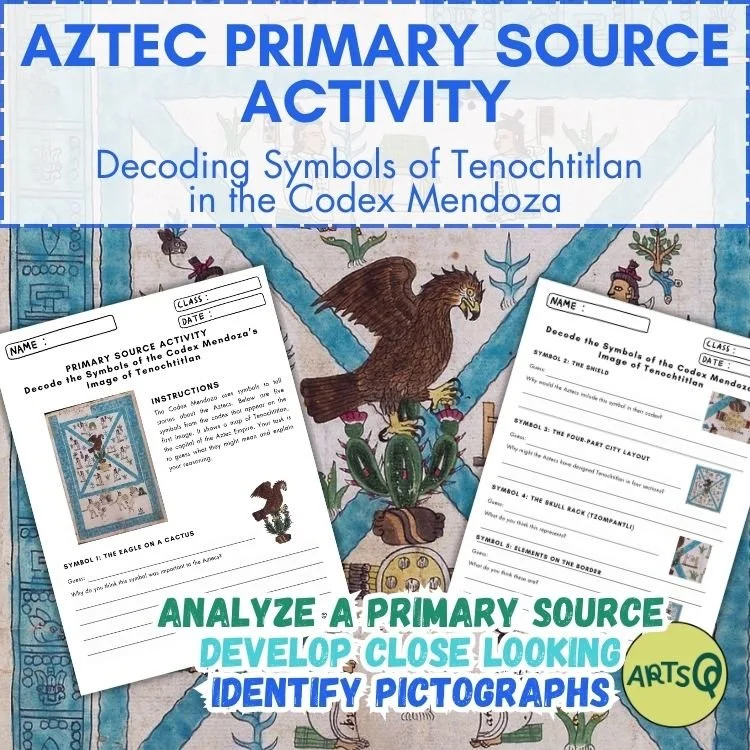
This primary source activity focuses on decoding symbols in the Codex Mendoza's image of Tenochtitlan, the capital city of the Aztec Empire.
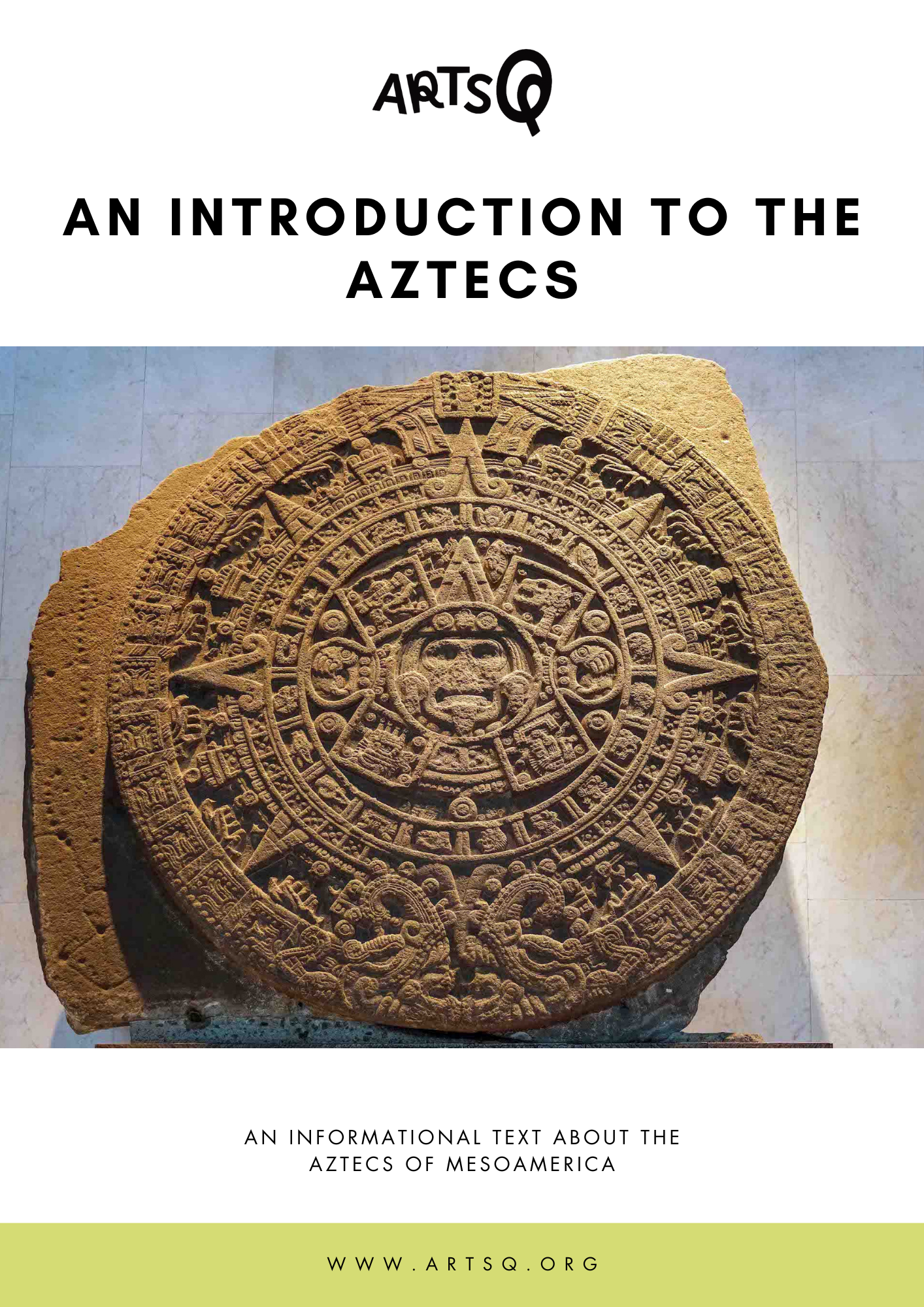
This informational text/reading comprehension on the Aztecs covers topics such as the Aztec migration, Tenochtitlan, chinampas, social organization, religion, writing, and more. For ease of reading, the text is in one full-color PDF and is similar to a textbook chapter. It is beautifully illustrated with photographs, many taken on-site, to make the Aztec world come alive.

This printable page of guided notes is for our video about the famous Aztec Sun Stone ("Calendar Stone"). It includes a word bank and then paragraphs with blank spaces for students to fill in.
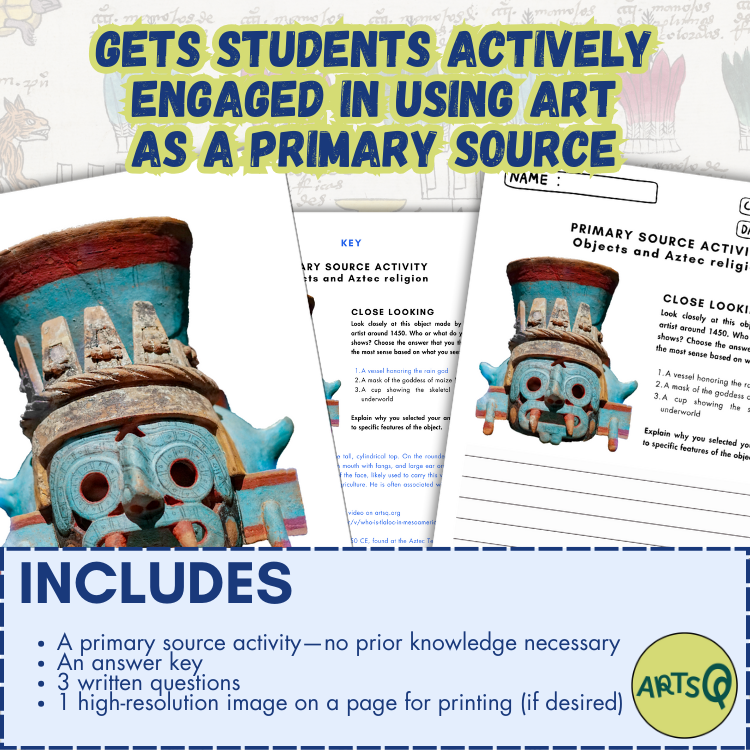
This primary source activity focuses on a painted vessel of the Aztec rain god Tlaloc to help students learn to look closely and use that visual evidence to make a claim. It also helps them understand the value of art and material culture as primary sources, which are important for learning about many different Mesoamerican cultures!
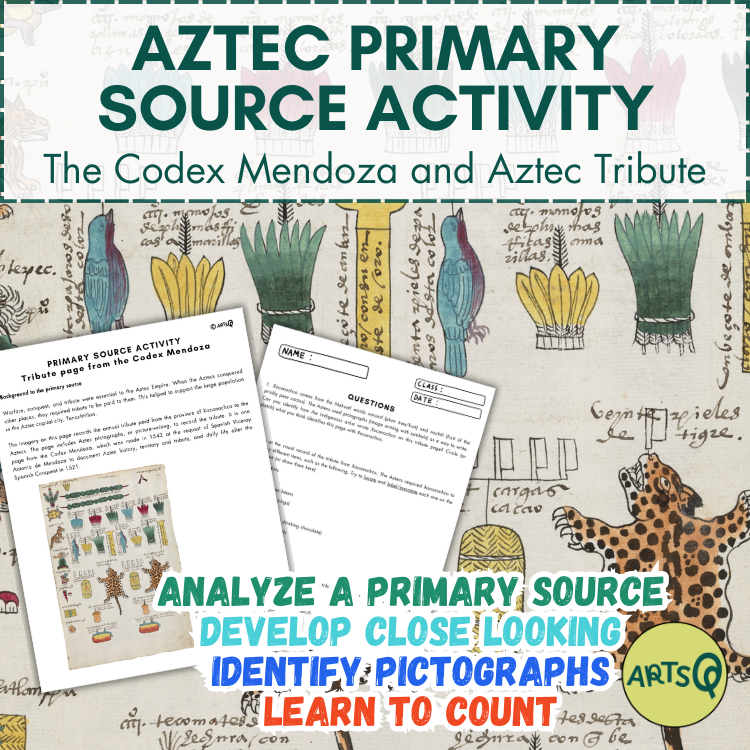
This primary source activity focuses on an illustrated page from the Codex Mendoza and tribute in the Aztec Empire. The chosen page is visually exciting, with jaguars, birds, and cacao!
This primary source activity focuses on Spanish conquistador Hernán Cortés's letters to the King of Spain, specifically one section in the Second Letter that describes the Aztec capital city of Tenochtitlan.
Using this excerpt from Cortés's letters, students are asked to answer document-based questions about what they read regarding Tenochtitlan. It asks students to write responses as well as sketch. This engaging activity brings primary sources about the Aztecs to life!