Silla horse-rider shaped vessels from the National Museum of Korea
Speaker: Dr. Cortney Chaffin Kim
Explore a pair of pouring vessels shaped like riders on squat horses, discovered in the 6th-century Geumnyeongchong, or “Gold Bell Tomb,” in Gyeongju, South Korea. The vessels belonged to “the little prince” of the Silla Kingdom and have been designated a national treasure in Korea. They give us valuable information about riding culture during the Silla Kingdom and the importance of horses in life and death.
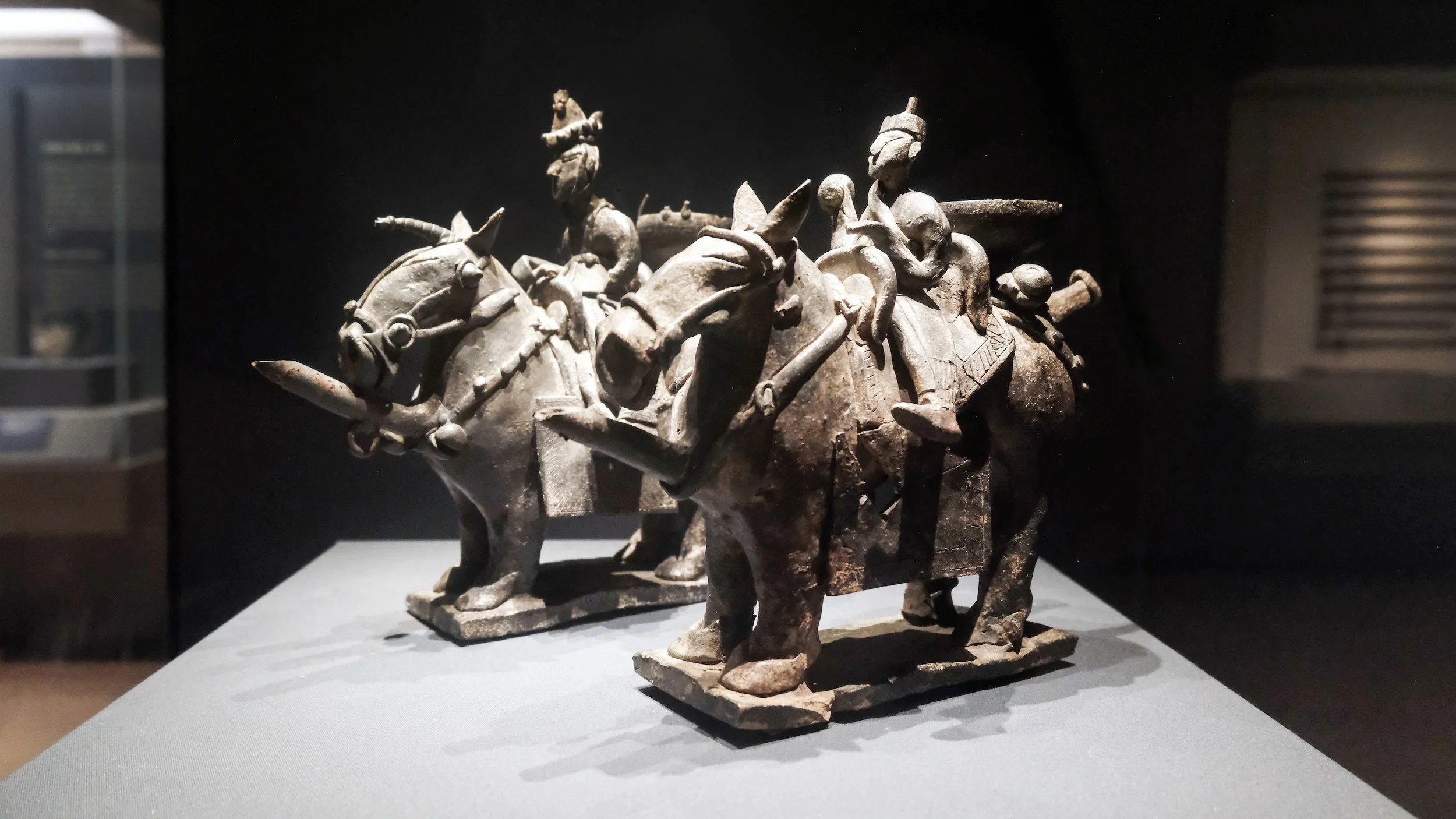
Rider vessels, early 6th century (Three Kingdoms Period), Silla, ceramic, from Geumnyeongchong Tomb in Nodong-dong, Gyeongju, Korea, 26.8 cm high. National Museum of Korea. Photo © Cortney Chaffin Kim.
Video chapters
0:00 A national treasure in Korea 0:37 The Silla Kingdom and the Geumnyeongchong, or “Gold Bell Tomb” in the Daereungwon tomb complex, Gyeongju 1:16 How the vessels were made 1:41 Examining Silla horse riding culture through the horse-and-rider-shaped vessels 3:10 Comparison with artifacts in the Cheonmachong, “the Heavenly Horse Tomb”3:29 The significance of the attendant rider 4:04 Horses in the Silla kingdom, in life and death
Learn more
See more resources about Korean art and history.
Learn more about Silla.