
The Merode Altarpiece (Annunciation Triptych), Workshop of Robert Campin
Speaker: Dr. Heather Graham
Northern Renaissance painting
Created in the workshop of Robert Campin around 1430, the Mérode Altarpiece is an outstanding example of Northern Renaissance painting. In three meticulously executed panels, a scene from sacred history unfolds. Witnessed by the work’s patrons who are shown kneeling in reverence, the central panel depicts the moment of Jesus Christ’s incarnation, a scene known as the Annunciation. In this video, we explore the rich symbolic imagery that brings this story from the life of the Virgin Mary into the world of fifteenth-century Europe. We learn how objects, colors, and even style convey meaning and guide viewers of the work in their devotions.
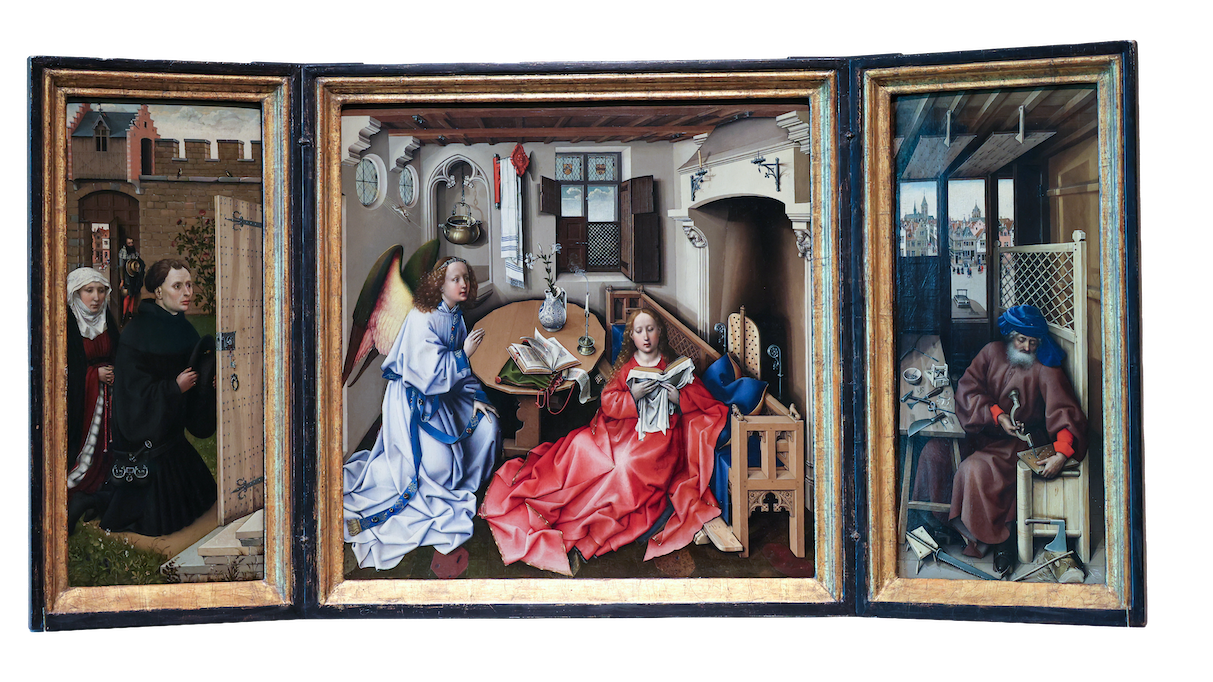
Workshop of Robert Campin, Annunciation Triptych (Merode Altarpiece), c. 1427–32, oil on oak, made in Tournai, South Netherlands, 25 3/8 x 46 3/8 in. (64.5 x 117.8 cm) The Cloisters, NYC. Photo: © Dr. Lauren Kilroy-Ewbank
Video chapters
0:00 A Miracle Unfolds
0:48 At Home with the Virgin Mary
2:00 Mary’s Iconography
3:24 Meaningful Objects
4:04 Two Texts
4:40 Signs of Mary’s Purity
5:38 The Details and Their Symbolic Meanings
6:30 Patrons as Witnesses
7:45 Stages of Creation
8:18 Joseph in His Workshop
9:10 Making It Modern
Learn more
Discover more about the Renaissance and early modern Europe.
See more AP Art History resources.