
The Great Stupa at Sanchi
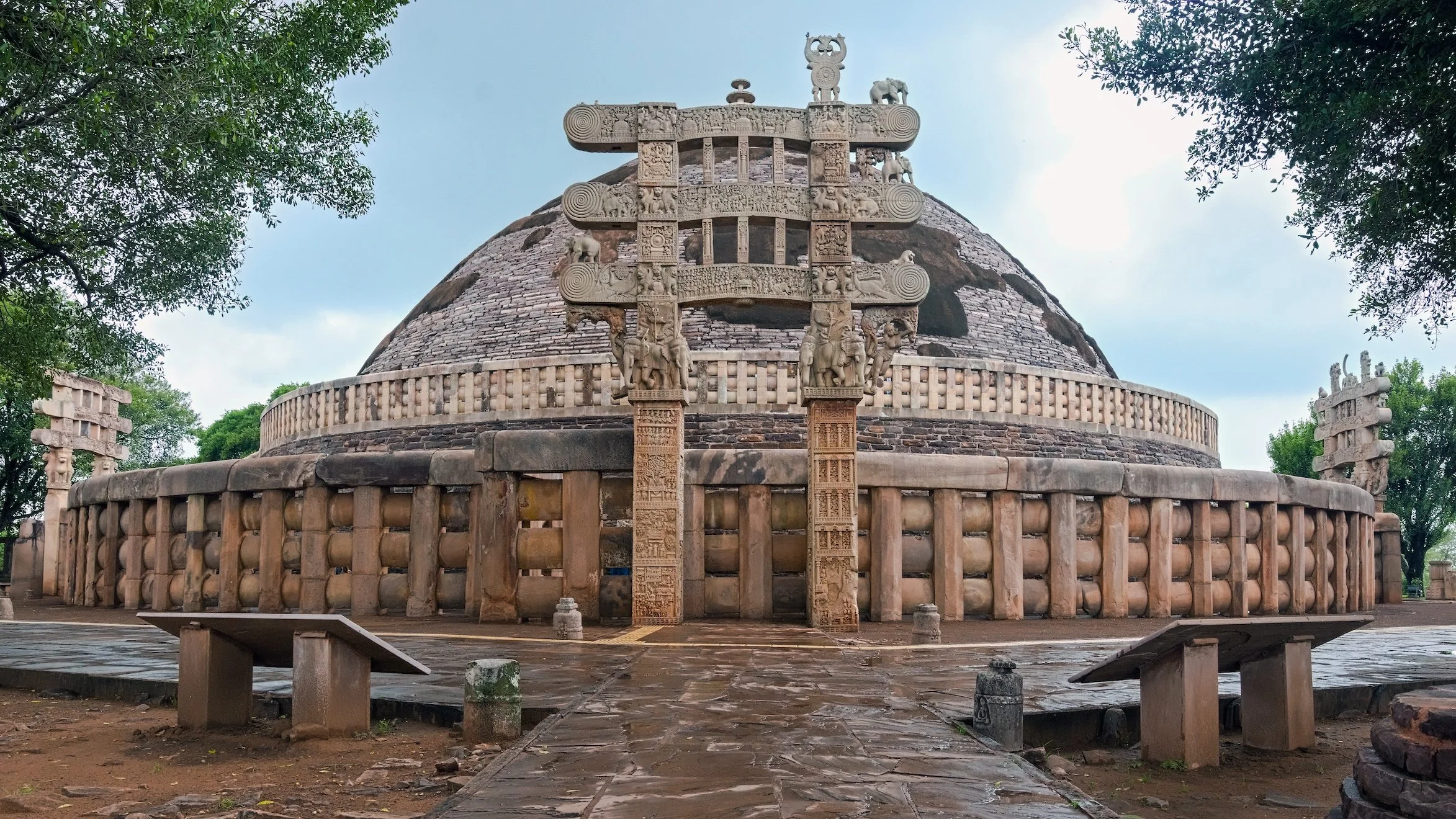
Looking toward the eastern torana, Great Stupa at Sanchi, Madhya Pradesh, India. Buddhist; Maurya, late Sunga Dynasty. c. 300 BCE–100 CE. Stone masonry, sandstone on dome.
What is a stupa?
The Great Stupa at Sanchi is the largest and earliest extant stupa in the world. A stupa is a monumental reliquary mound, an architectural monument that contains a sacred relic. A relic is a special religious object, such as a bone of a religious leader or something special they owned or touched.
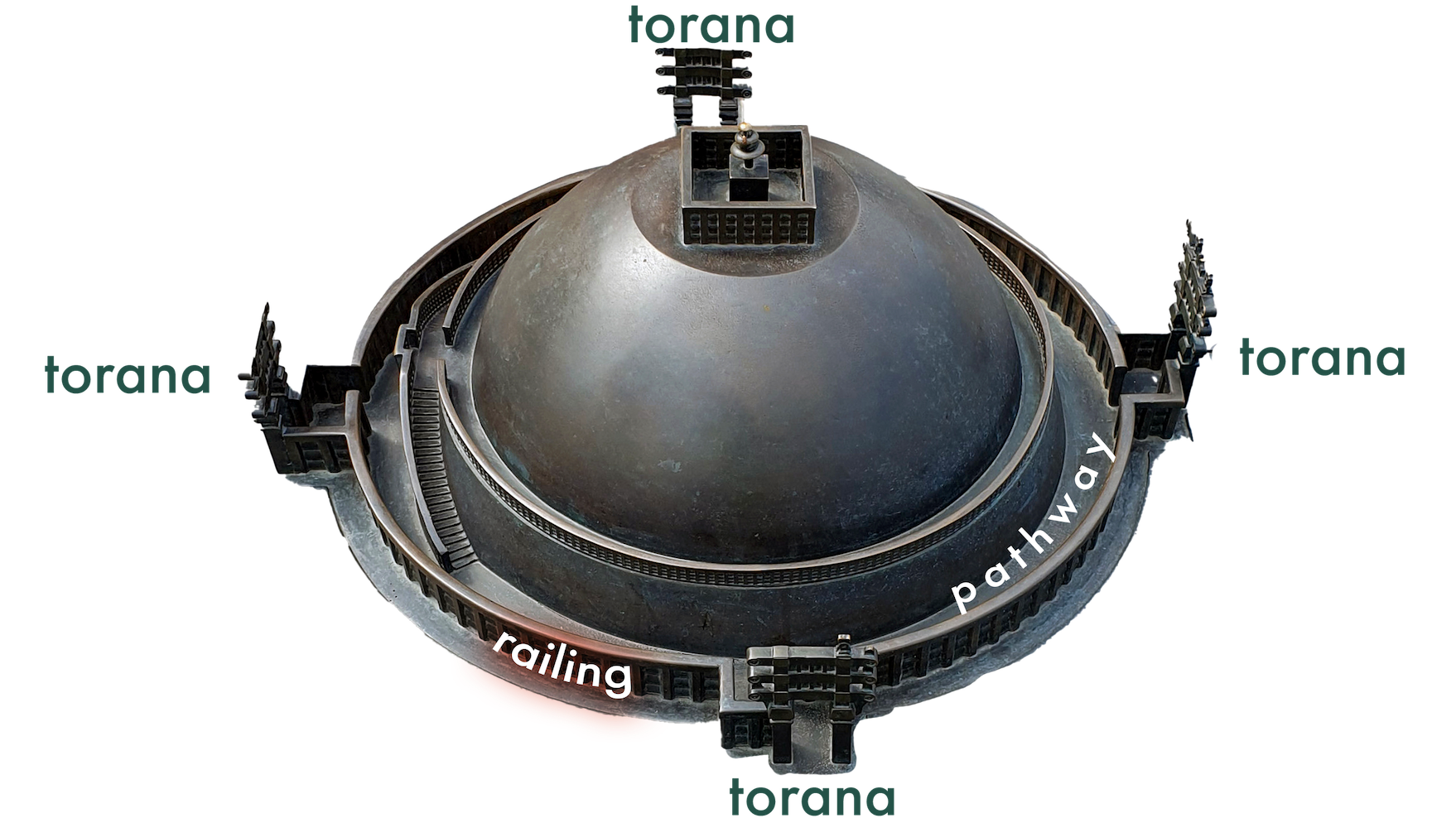
Diagram of the Great Stupa at Sanchi.
What are toranas?
The Great Stupa is surrounded by a circular stone railing with four torana gateways. The gateways lead to a path for pradakshina, or ritual circumambulation, around the solid stone hemisphere to prepare the mind for meditation. Each torana is composed of two posts and three architraves, and they are richly decorated with relief carvings that depict narratives from the life of the Historical Buddha.
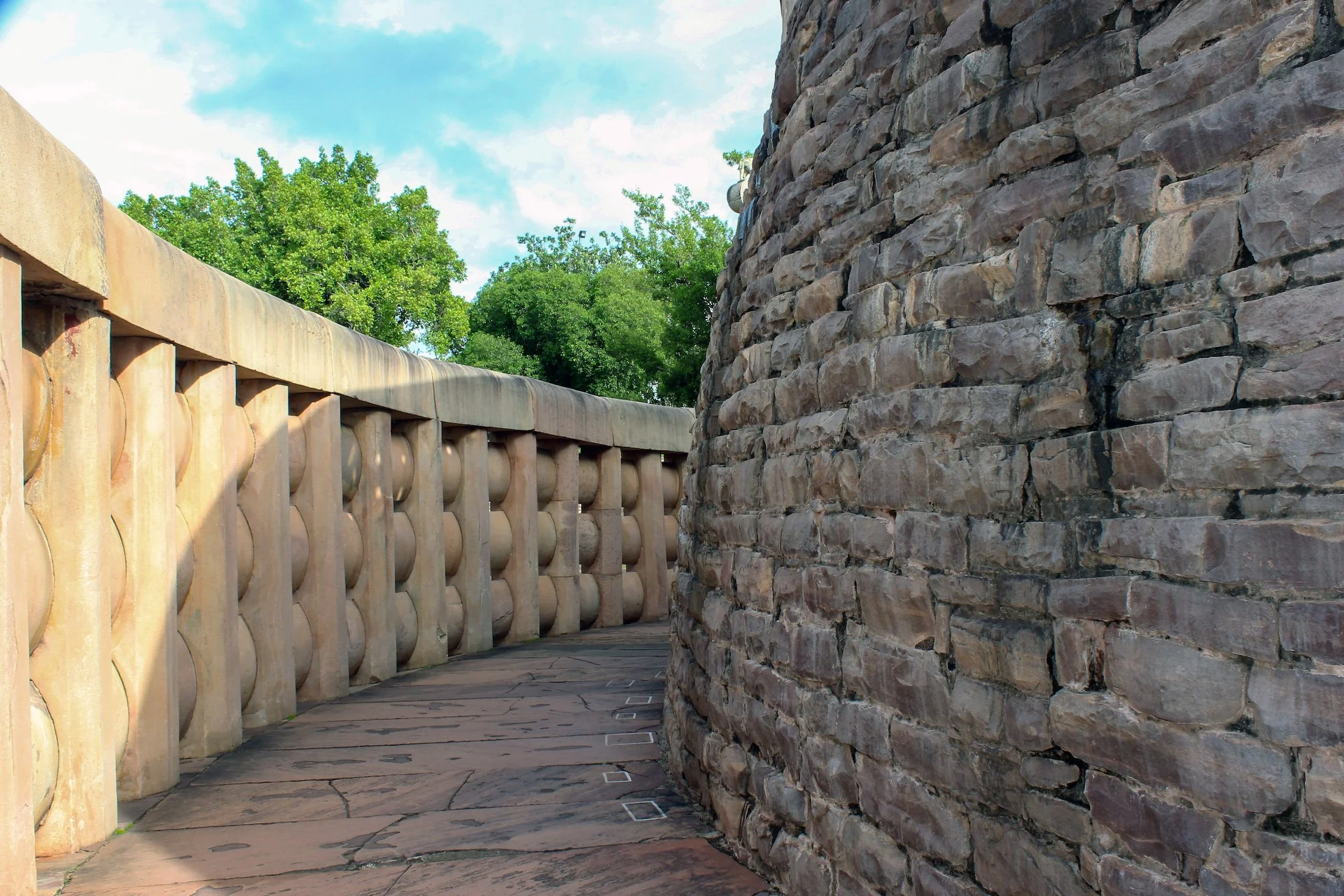
Circumambulatory path inside the Great Stupa.
Like all the narratives on the gateways, these relief carvings are didactic, meaning they are intended to teach something. Images and symbols are used to tell important stories from the Buddha's life.
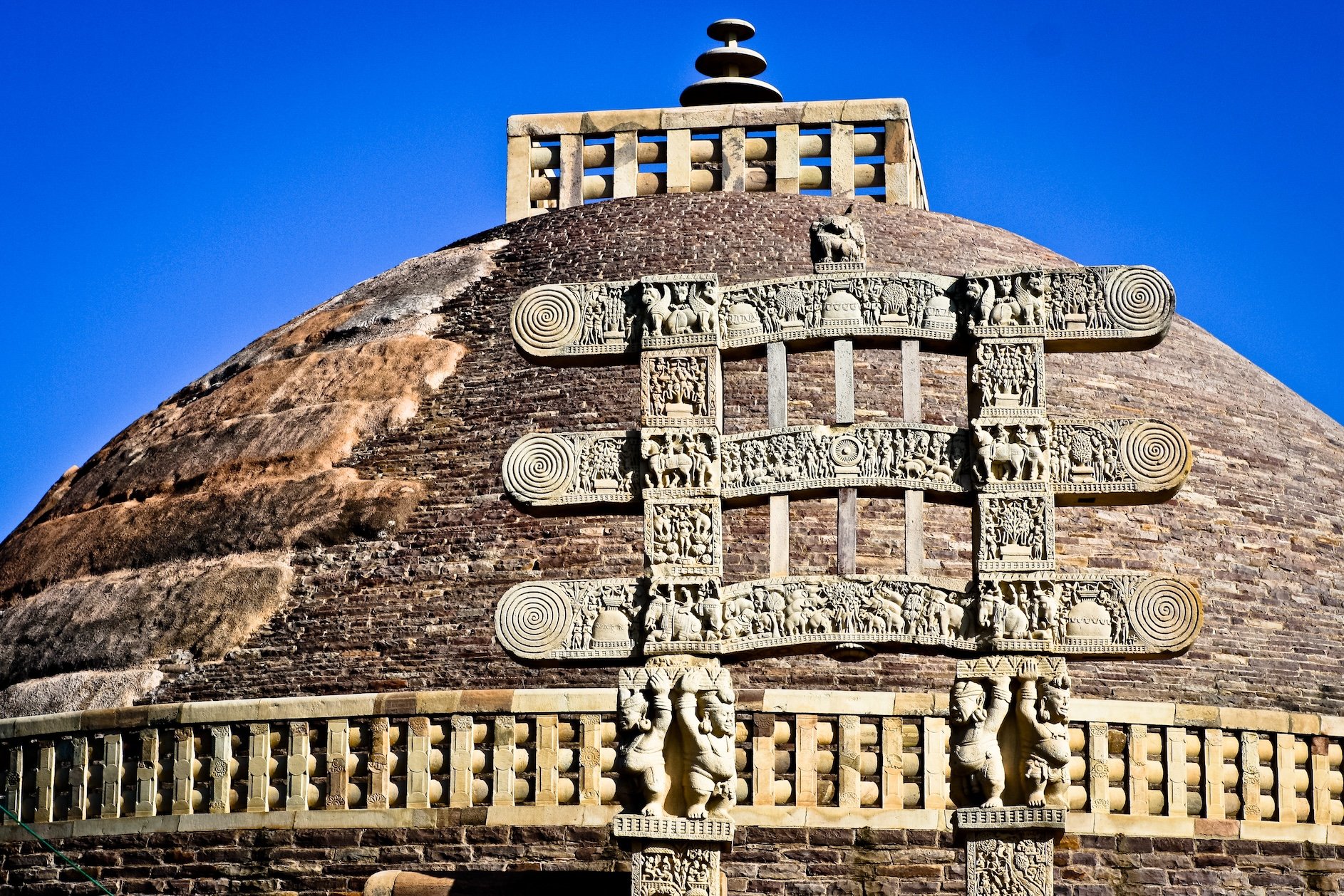
Close up of a torana of the Great Stupa at Sanchi.
Get to know the Great Stupa at Sanchi
We have videos to help you explore the Great Stupa at Sanchi further. Watch our introductions to what a stupa is, the Enlightenment relief and conflated narrative, and the Great Departure and continuous narrative, with more videos on the way.