
Wari Tapestry-Woven Tunic
Speaker: Dr. Lauren Kilroy-Ewbank
A tapestry-woven Wari tunic
Look closely at a tapestry-woven Wari tunic from 600 to 850 CE. This video considers how the Wari Empire used diverse materials to create complex textiles. It focuses on the technical skill required to produce such intricate garments in the ancient Andes. We also examine the specific materials and weaving techniques that define the Wari tunic, as well as the specific motifs and forms on the textile, offering a detailed look at how these objects functioned within their society. This video is for anyone interested in Andean textiles, the history of clothing, and ancient craftsmanship.
Note: An alternative spelling for Wari is Huari.
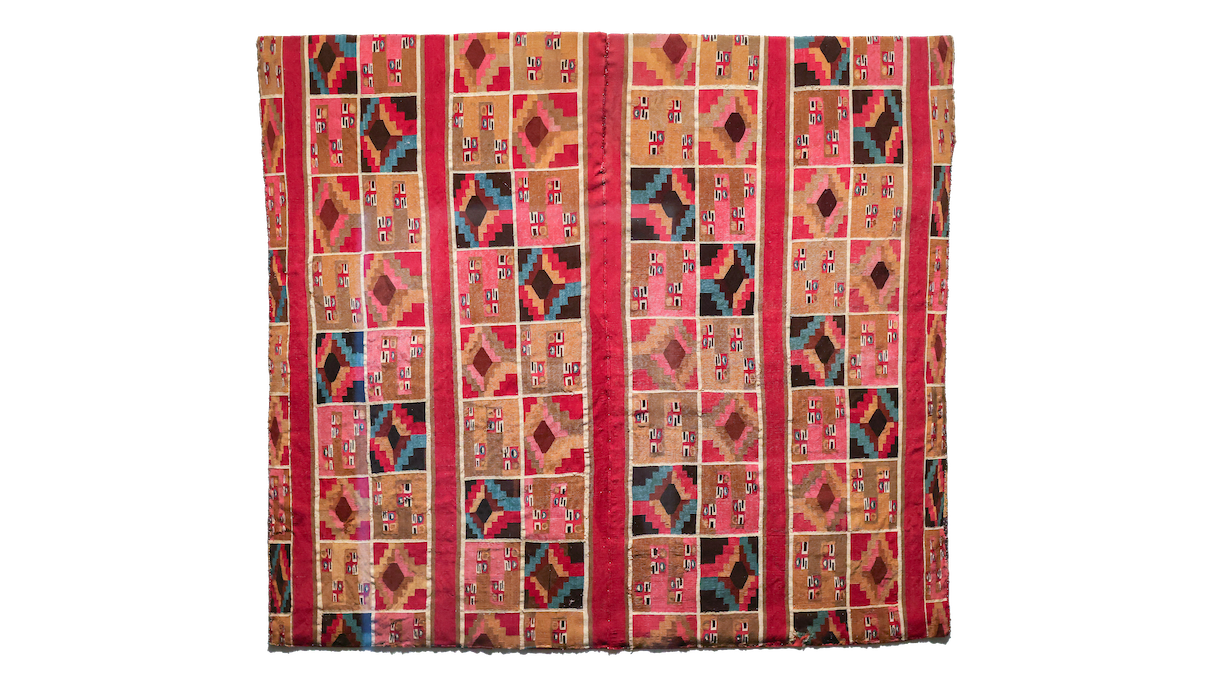
Man’s Tunic, Wari, c. 600–850 CE, camelid fiber and cotton, interlocked tapestry, 37 5/8 × 42 1/4 in. (95.57 × 107.32 cm). LACMA, photo © Lauren Kilroy-Ewbank.
Video chapters
0:00 A great textile tradition
0:35 A man's tunic and what it communicated
1:37 Making the tunic and its colors
2:29 The pattern
Learn more
Learn more about the Ancient Andes.
Discover more about the global Middle Ages.