
Pictures of Famous Places (meisho-e) and Ando Hiroshige's “One Hundred Famous Views of Edo”
Speaker: Dr. Cortney Chaffin Kim
Hiroshige's "Plum Estate, Kameido"
The video explores meisho-e, or "pictures of famous places" genre in Edo Japan. Learn about Hiroshige's "Plum Estate, Kameido," a woodblock print of Edo's famous Sleeping Dragon Plum tree. Hiroshige is credited with popularizing the genre in the 19th century with the publication of his meisho-e series Fifty-Three Stations of the Tōkaidō from 1832–34, inspired by Hokusai’s “Great Wave” print. Along with Fifty-Three Stations of the Tōkaidō, we also look at Hiroshige’s One Hundred Famous Views of Edo series, published between 1856 and 1859. This was Hiroshige’s grand farewell when he retired from printmaking.
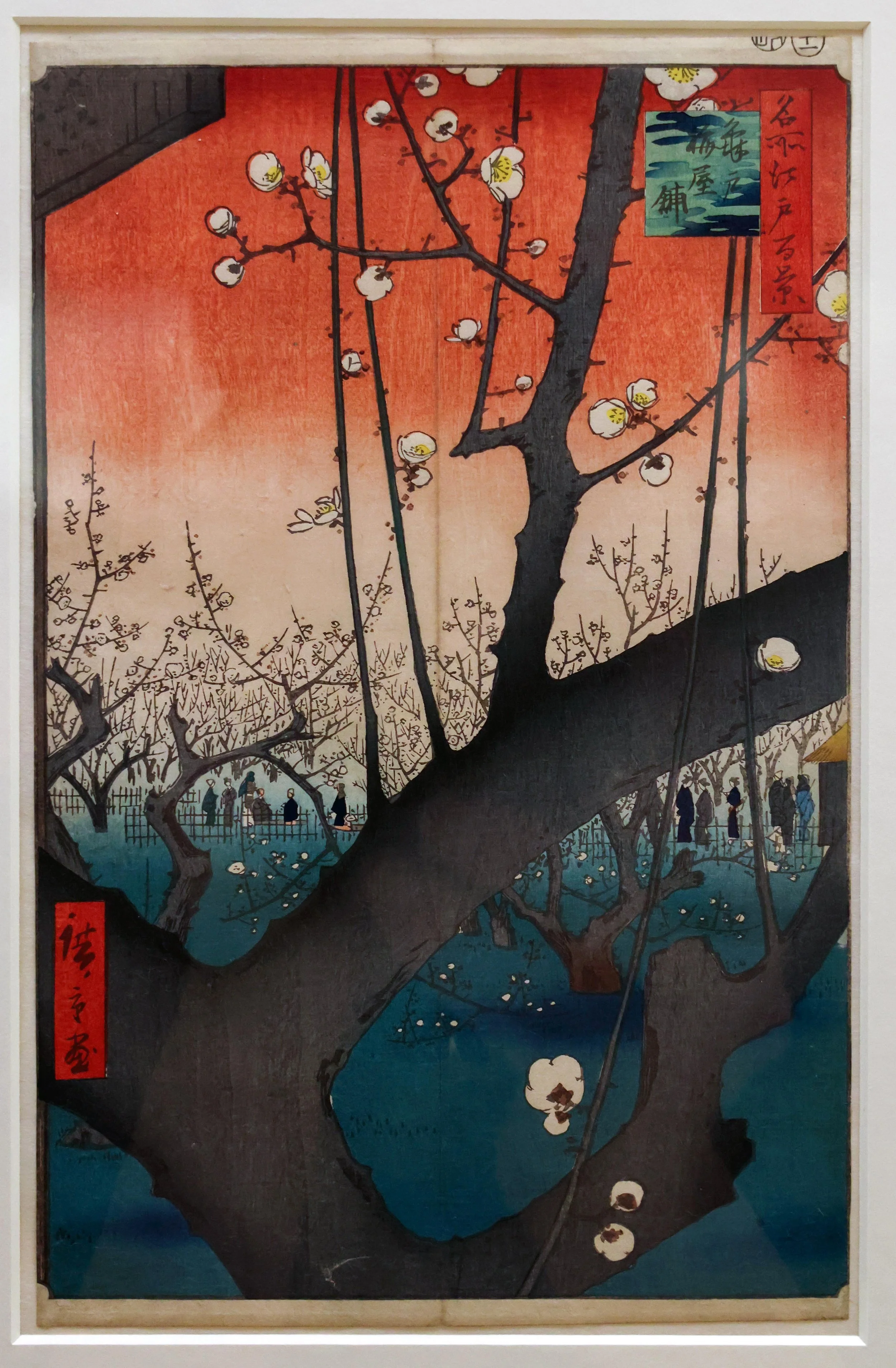
Utagawa (Andō) Hiroshige, “Plum Estate, Kameido”
1857, from the series One Hundred Famous Views of Edo, woodblock print (nishiki-e), ink and color on paper
Learn how Hiroshige's innovative vertical compositions and color gradations captured life in Edo, and how his prints eventually traveled to Europe, influencing artists like Vincent van Gogh.
Video chapters
0:00 “Plum Estate, Kameido” and Utagawa Hiroshige
0:37 What is meisho-e?
1:37 One Hundred Famous Views of Edo
3:21 Influence on European artists
Learn more
Find more resources about Edo Japan.
Take our free mini-class about Japanese printmaking.